President Lee Jae-myung raised the necessity of reforming the real estate capital gains tax long-term special deduction (Jangteukgong) system. While emphasizing the need for deductions for periods of actual residence, he deemed long-term investment deductions for non-residential properties as policies that encourage speculation. The government is currently discussing the policy, and nothing has been decided, but it is emphasizing the principle of prioritizing homeownership for residential purposes.
President Lee Jae-myung expressed a clear stance on the real estate capital gains tax long-term special deduction (Jangteukgong) system. The President emphasized the absolute necessity of capital gains tax deductions for single homeowners' actual residence periods, underscoring the importance of housing protection. However, he characterized the act of reducing capital gains tax on high-value homes merely for long-term investment in properties not intended for residence as an abnormal policy that encourages housing speculation, rather than a housing protection policy. These remarks suggest the need for a fundamental overhaul of the Jangteukgong system.
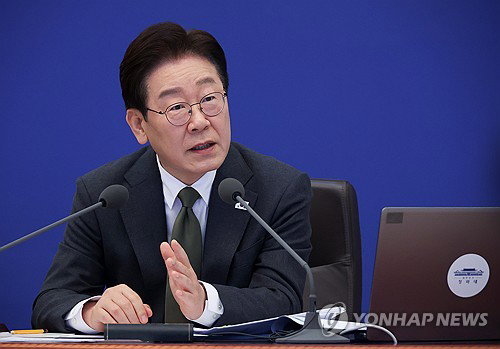
▲ President Lee Jae-myung
The President reaffirmed the principle that taxes should naturally be levied where income is generated, articulating the legitimacy of paying taxes on housing capital gains. Specifically, he proposed a concrete direction: reducing deductions for non-residential holding periods and proportionally increasing deductions for residential holding periods, as a way to properly protect the housing of single homeowners. This is interpreted as a criticism of the current Jangteukgong system, which significantly reduces capital gains tax merely for long-term ownership regardless of residence, and a call for a policy shift towards actual residence.
President Lee strongly criticized the "smart single home scam" speculation phenomenon spreading across the nation, or even globally, centered in Seoul's Gangnam area, and the forces protecting them. He warned against the resurgence of real estate speculation-promoting forces, clearly stating his determination to eradicate speculation. Furthermore, he pointed out the tactic of some opposition parties fabricating and attacking the government by presenting Jangteukgong restriction bills, which are unrelated to the administration, as if they were proposed by the President, expressing concern over political disputes. This is interpreted as an attempt to prevent real estate policy from becoming a political issue ahead of local elections. On the 18th, he also refuted the People Power Party's 'tax bomb' claims as 'a logical contradiction and clear false propaganda,' clarifying the government's position on the Jangteukgong abolition controversy.
▲ Presenting Principles for Jangteukgong Reform
Officials from the Presidential Office explained that while discussions on the Jangteukgong system are underway at the government level following President Lee's message, no decisions have been made yet. This is interpreted as an emphasis on prudence in policy implementation and an intention to prevent unnecessary market confusion. The officials added that President Lee's remarks were a principled emphasis that it is important for single homeowners to receive preferential treatment compared to multiple homeowners, and that even for single homeowners, ownership for investment purposes should be distinguished from ownership for residential purposes. In other words, while the broad direction of the policy has been presented, specific implementation plans are still in the discussion phase.
Another Presidential Office official stated that the goal is to protect single homeowners as much as possible and ensure a smooth supply of other housing. To this end, various scenarios for specific policies are prepared, and diverse opinions regarding the Jangteukgong system are being gathered, with sufficient discussion deemed necessary. These remarks indicate that the government is not merely considering abolishing the existing system but is comprehensively reviewing complex policy alternatives that can protect actual resident single homeowners while curbing real estate speculation. A cautious approach, considering market changes and public opinion, is evident.
▲ Seeking a Balance Between Protecting Single Homeowners and Curbing Speculation
President Lee Jae-myung's recent remarks and the explanations from Presidential Office officials simultaneously reveal the government's firm principles and cautious approach to reforming the long-term special deduction system. While prioritizing the protection of single homeowners who are actual residents, there is a clear intention to strengthen taxation on long-term speculation for non-residential purposes. In particular, the refutation of the 'tax bomb' narrative and the distancing from 'some opposition party bills' are interpreted as strategies to minimize potential political controversies during future policy implementation.
The government's policy direction for stabilizing the real estate market is expected to become clearer. Capital gains tax deduction benefits for actual residential properties are highly likely to be maintained or strengthened, while the Jangteukgong for non-residential properties held for investment purposes is likely to be reduced. However, such policy changes require sufficient social consensus and meticulous design under the broader goal of ensuring housing stability for the public and securing a healthy real estate market. The government is expected to continue exploring various scenarios to enhance market predictability, curb speculative forces, and protect genuine homebuyers.

![[금융진단] 미 증시, 지정학 완화·빅테크 반등에 상승](https://images.jkn.co.kr/data/images/full/98/28/982892.jpg?aspect_ratio=288:168&crop_gravity=northwest&width=288)