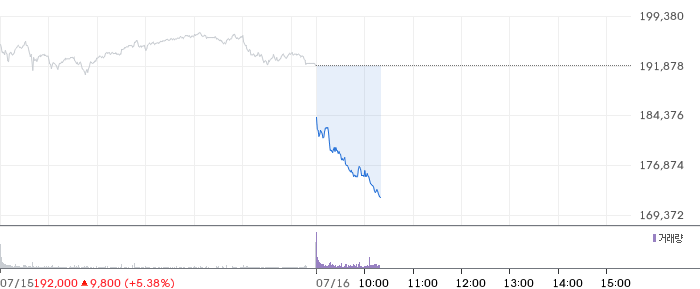
Samsung Electronics Preferred Stock showed a sharp decline during today's trading session and is currently trading at 172,700 won. This represents a sharp drop of 19,300 won (-10.05%) compared to the previous day, attributed to intensified selling pressure from individual investors. The adjustment sentiment across global tech stocks and concerns about slowing semiconductor conditions appear to be dampening investor sentiment.
Samsung Electronics Preferred Stock (005935), the flagship stock of KOSPI, recorded a decline in the double-digit range on the 16th, heightening investor anxiety. The downward trend that began from this morning accelerated further in the afternoon, with the stock currently trading at 172,700 won, down 19,300 won (-10.05%) from the previous trading day. It is unusual for preferred stocks ranking among the top in market capitalization in the domestic stock market to undergo such a significant adjustment, and the impact on the broader market is drawing attention.
Analysis suggests that Samsung Electronics Preferred Stock's sharp decline is largely attributable to supply and demand imbalances. With stock prices having risen over a short period recently, large volumes of profit-taking sales from individual investors have emerged, exerting strong downward pressure on stock prices. Meanwhile, institutional and foreign investors have maintained a wait-and-see approach or shown limited selling dominance rather than aggressive buying, failing to defend against the price decline. In particular, the prolonged possibility of a high-interest-rate environment and persistent concerns about economic slowdown have spread risk-aversion sentiment, which is interpreted as having a negative impact on individual investors' investment psychology.
Adjustment pressure on global tech stocks and a conservative outlook on the semiconductor industry are acting as factors driving down Samsung Electronics Preferred Stock's price. In recent years, market expectations for explosive growth in artificial intelligence (AI) semiconductor demand have been driving the market; however, analyses suggest that inventory burdens and downward price pressures in traditional DRAM and NAND flash memory markets still exist. With major overseas technology companies' stocks showing concurrent weakness, investment sentiment toward the domestic semiconductor sector as a whole is also contracting.