A massive $418 million contract has marked the retirement of the USS Enterprise (CVN-65), the world's first nuclear-powered aircraft carrier, igniting heated debates over the future of naval warfare at sea.
On July 18, 2026, the U.S. Navy announced that it had concluded a $418 million contract for the decommissioning and dismantling of the USS Enterprise (CVN-65). As the world's first nuclear-powered aircraft carrier and long a cornerstone of U.S. Navy power, the Enterprise has now officially begun its final journey into the pages of history. This massive contract underscores both the status of this historic vessel that defined an era and the symbolic significance of the departure of a major power platform.
As news of the Enterprise's retirement spreads, another U.S. Navy nuclear-powered aircraft carrier, the USS Theodore Roosevelt, is currently demonstrating overwhelming presence in the Pacific while participating in the 2026 Rim of the Pacific Exercise (RIMPAC). Since the exercise began on July 6, the Roosevelt has continued to prove itself as an active carrier, generating geopolitical tensions and remaining central to maritime power. Notably, on July 17, North Korea condemned the RIMPAC exercise through the Korean Central News Agency as a "war drill that brings turbulence of heightened tensions to the Pacific" and threatened "proportional countermeasures," clearly demonstrating that aircraft carriers remain at the center of ongoing conflicts.
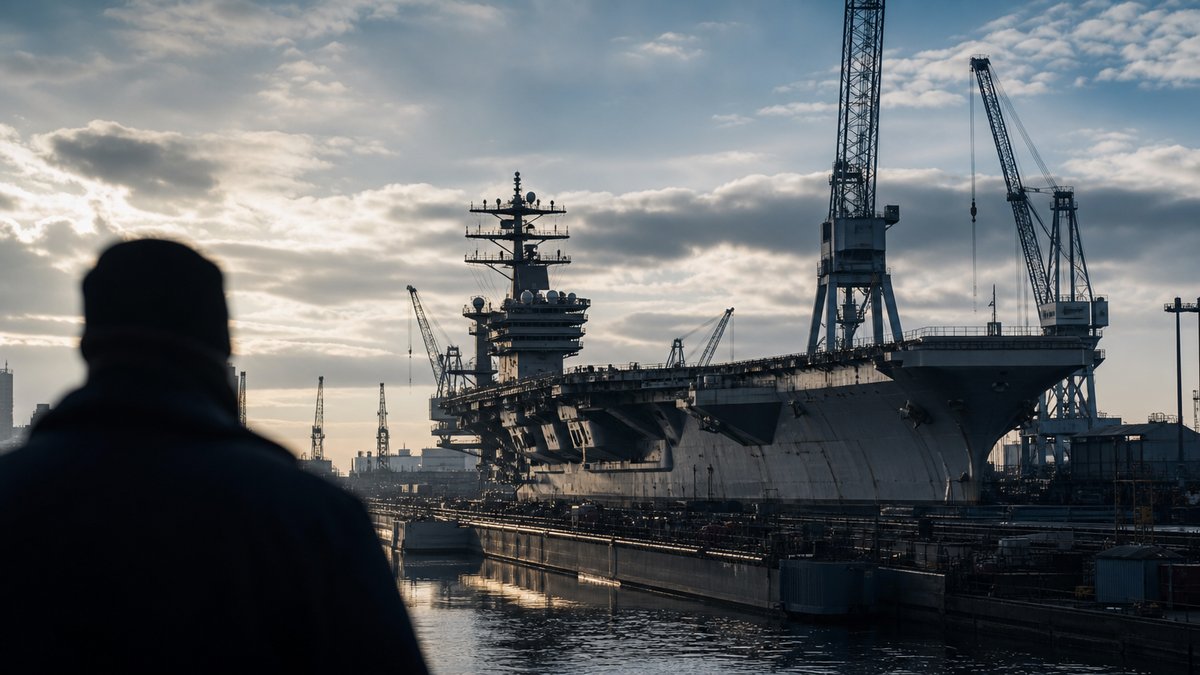
However, at this juncture where the Enterprise's departure and the Roosevelt's activities intersect, growing voices are calling for fundamental changes in the paradigm of future naval warfare. Experts analyze that the focus of naval warfare is now shifting "from competition in platform gigantism to competition in lower-cost networks and unmanned systems." New asymmetric naval warfare concepts, such as "converting cargo ships into carriers," are being proposed, raising fundamental questions about the existing carrier-centric naval structure.