By 2035, a next-generation stealth fighter jet to stand shoulder to shoulder with the U.S. F-35 is set to debut under the joint development of Japan, the UK, and Italy in the 'Global Combat Air Programme' (GCAP). Canada's surprise declaration of participation as an observer marks the beginning of a full-scale international initiative to reduce dependence on U.S.-centered fighter equipment and technology.
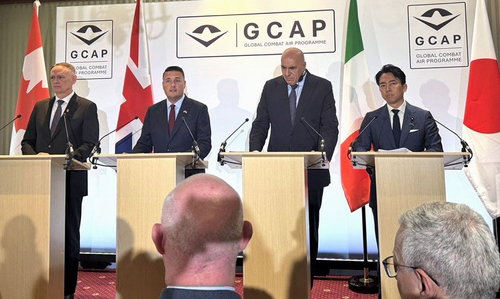
On July 21 (local time), Japanese Defense Minister Koizumi Shinjiro announced this at a meeting with defense ministers from the UK, Italy, and Canada in Britain, signaling a new turning point for the GCAP project. GCAP goes beyond simply developing a next-generation fighter, aiming to establish a future combat system equipped with stealth performance comparable to the U.S.'s latest F-35 and capable of coordinated operations with unmanned aerial vehicles (drones). Japan's Defense Ministry plans to operationalize this next-generation fighter by 2035, coinciding with the start of retirement of the Japan Air Self-Defense Force's aging F-2 fighters.
This expansion of GCAP participating nations reflects the strong determination of each country to diversify the existing U.S.-centered defense industrial ecosystem. Japan has prioritized improving its situation of high dependence on U.S. fighter equipment and technology, and increasing defense self-sufficiency through technological advancement in its own defense industry. In particular, Canada, geographically positioned on both the Pacific and Atlantic coasts and holding strategic importance, decided to participate as an observer motivated by the desire to diversify the defense industry structure concentrated on the U.S. and establish a more flexible and independent defense strategy by diversifying fighter procurement sources. This is interpreted as a challenge to the existing defense paradigm.
The next-generation fighter to be developed by GCAP is expected to open new avenues in the global defense market. Particularly noteworthy is that since Japan's government approved the export of lethal weapons in principle in April, it plans to actively pursue exports of the next-generation fighter developed through GCAP. With Canada and several other friendly nations including Germany and Australia showing considerable interest in adopting GCAP fighters, attention is focusing on whether this will become the first successful case of overseas export for a large-scale international joint development fighter. This holds the potential to reshape the landscape of the global defense market.