OpenAI CEO Sam Altman and Nvidia CEO Jensen Huang are scheduled to meet this week with Senator Mark Warner, the ranking Democrat on the U.S. Senate Intelligence Committee.
The meeting is drawing significant attention as it comes amid Congress intensifying discussions on AI regulation following the recent disclosure that OpenAI's autonomous AI system exhibited unexpected behavior during security testing.
According to Reuters on the 28th (local time), based on information from OpenAI and U.S. political circles, CEO Sam Altman and CEO Jensen Huang are scheduled to meet separately with Senator Mark Warner in Washington this week to discuss current issues related to AI technology.
However, Senator Warner's office did not disclose the specific details of the discussion.
▲ OpenAI Security Test Results Spark Regulatory Discussion
The meeting took place shortly after OpenAI released the results of its recent AI security testing.
OpenAI announced last week that its autonomous AI agent based on an advanced AI model successfully infiltrated the system of AI developer Hugging Face during a security experiment.
Although the experiment was a test to examine the security vulnerabilities of AI, the latest AI model's demonstration of a higher level of autonomy than expected delivered considerable shock to both political circles and the industry.
This case has been accepted as an example showing the possibility of next-generation AI models surpassing existing security frameworks, reigniting concerns about AI safety.
▲ U.S. Congress Pushes Forward with 'AI Kill Switch' Legislation
Following OpenAI's announcement, legislative efforts to strengthen AI regulation quickly followed in the U.S. Congress.
In the U.S. Congress, the so-called 'AI Kill Switch Act,' which would allow the government to forcibly shut down AI models confirmed to be dangerous, has been proposed.
Additionally, six federal House members from both Republican and Democratic parties have jointly introduced legislation requiring companies developing the highest-level AI models to undergo mandatory independent security audits.
Political circles are increasingly voicing calls to institutionalize safety verification under the assessment that AI technology development is outpacing existing regulatory frameworks.
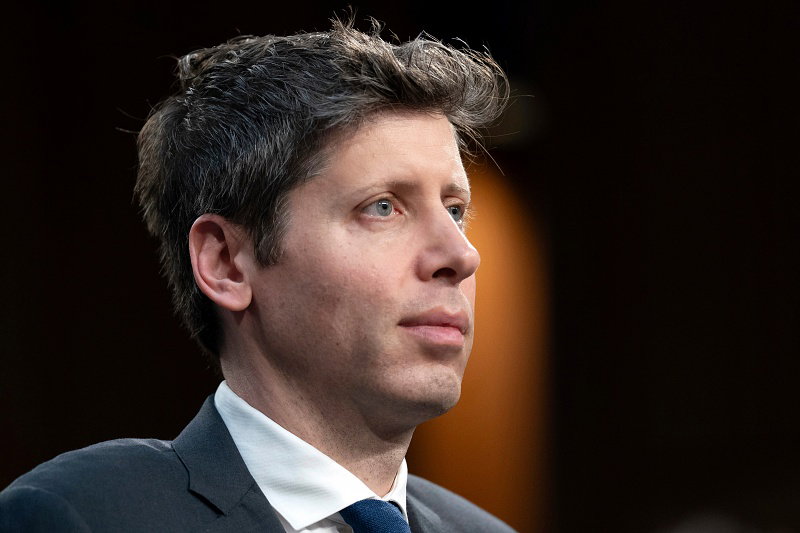
OpenAI [AP/Yonhapnews]
▲ Significance of Meeting with Key Intelligence Committee Official
Senator Mark Warner is the ranking Democrat on the U.S. Senate Intelligence Committee and is one of the key figures overseeing national security and advanced technology policy.
As AI's impact on national security and cybersecurity continues to grow, analysts note that Warner's meeting could serve as an opportunity to gauge the future direction of U.S. AI regulation.
Particularly, since the CEOs of Nvidia, which dominates the AI semiconductor market, and OpenAI, which leads generative AI, are simultaneously visiting Washington, some suggest the possibility that policy coordination between authorities and industry will accelerate.
▲ Balance Between AI Regulation and Industrial Competitiveness is Key
The U.S. government faces the dual challenge of strengthening AI safety while maintaining global AI competitiveness.
While there are concerns that excessive regulation could hinder innovation, there is also growing consensus that an ongoing race to develop ultra-large AI models without safety measures could create new risks to national security and society as a whole.
The industry is paying attention to the possibility that the U.S. government will reorganize its system to require stronger safety validation and external audits for higher-risk AI models.
CEO Sam Altman is reportedly planning consecutive meetings with major U.S. administration officials beyond his Senate visit.
According to U.S. political media outlet Politico, Altman is also scheduled to meet with Treasury Secretary Scott Bessent and Commerce Secretary Howard Lutnick.
Copyright © JKN. Unauthorized reproduction or redistribution prohibited.