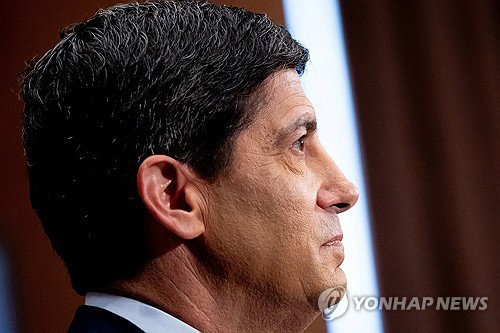
The U.S. Federal Reserve (Fed) held its benchmark interest rate at 3.50~3.75% for the fifth consecutive time on the 29th (local time), but the decision came through an unusual 9-to-3 vote, widening cracks within the Fed and raising uncertainty about monetary policy direction.
This contrasts with the unanimous decision to hold rates at the Federal Open Market Committee (FOMC) meeting in June. In particular, three committee members—Beth Hammock, Neel Kashkari, and Lorie Logan—cast dissenting votes, arguing for a 0.25 percentage point rate increase, delivering a significant shock to the market. Their hawkish stance is analyzed as reflecting the current situation where international oil prices and U.S. domestic inflation have surged due to escalating military tensions between the U.S. and Iran.
The FOMC, led by newly appointed Fed Chair Kevin Walsh, made the decision to maintain rates for the second consecutive meeting with this hold, but the vote split marks the first disagreement since taking office, intensifying focus on the chair's leadership and the future direction of the Fed's monetary policy.
The Fed stated that it held rates because "economic activity has expanded at a solid pace despite heightened uncertainty from Middle East conflicts and other factors." It also emphasized the strength of the U.S. economy, noting that "productivity improvements and capital investment remain strong, and job growth is keeping pace with the labor force while the unemployment rate has shown little change." Regarding inflation, while it remains above the 2% target, the Fed explained this is partly due to supply shocks in specific sectors such as energy.