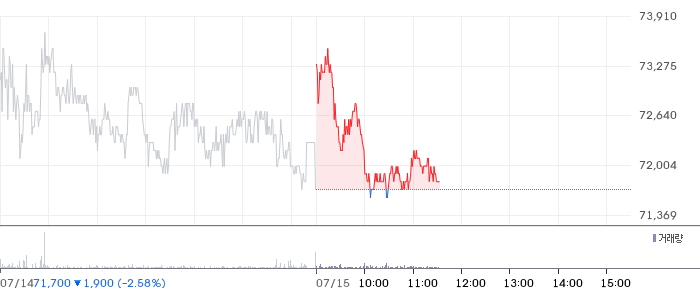
CJ Logistics (000120) stock price remained at 71,700 won, recording a flat trend. The result is interpreted as market sentiment becoming more cautious without any special bullish or bearish factors during the trading session. Analysis suggests that the stock has entered a consolidation phase amid divergent movements by major market participants.
CJ Logistics (000120), a leading domestic logistics company, maintained 71,700 won in the morning trading, recording a 0.00% change compared to the previous trading day, continuing a trendless consolidation pattern. This is interpreted as a result of investor sentiment being dampened by concerns about recent short-term gains and increased external uncertainties. Currently, the stock price appears to be in a breather period following last week's strength.
From a supply and demand perspective, foreign investors showed slight buying dominance, attempting to support the stock price, but institutional investors limited upside movement by taking profit-taking positions. Notably, selling pressure centered on pension funds and mutual funds has been observed, suggesting caution about short-term overheating. Individual investors displayed mixed signals without establishing clear direction, increasingly adopting a wait-and-see posture amid volatile intraday movements. These divergent movements between demand and supply participants appear to be a major factor binding the current CJ Logistics stock price to the flat range.
Looking at industry trends, the domestic logistics and delivery market in 2026 continues to maintain steady growth, but fierce competition and ongoing cost pressures from labor and fuel expenses persist. In particular, despite continued expansion of the e-commerce market, intensifying last-mile delivery competition and deteriorating profitability of dawn delivery services are becoming industry-wide concerns. CJ Logistics is solidifying its strong position based on dominant market share in the domestic delivery market, but is at a point where both new business investment and efficiency improvements are simultaneously required. Efforts to secure growth momentum in overseas markets such as Southeast Asia are evaluated as potential factors that could positively impact stock prices.