The Bank of Korea's Monetary Policy Committee raised the benchmark interest rate from 2.50% to 2.75% annually on the 16th, a 0.25 percentage point increase. This is the first rate hike in three and a half years since January 2023, and analysts assessed that the monetary policy stance has shifted back to a tightening phase.
The decision is analyzed as reflecting a determination that the need to maintain an accommodative monetary stance has diminished as inflationary pressures expand while economic recovery appears stronger than expected.
▲ Expanding Inflationary Pressures…Background for Tightening Shift
The Monetary Policy Committee previously cut the benchmark rate by a total of 1.00 percentage point across four occasions in October and November 2024 and February and May of this year to support economic growth.
At the time, economic defense became a priority as domestic and external headwinds converged, including political uncertainty, construction sector slump, and U.S. tariff policies.
Afterward, despite increased household debt and high exchange rate burdens, the committee maintained the benchmark rate frozen for eight consecutive meetings while monitoring the situation. However, analysts noted that as inflation has become more pronounced recently, monetary policy has shifted to tightening.
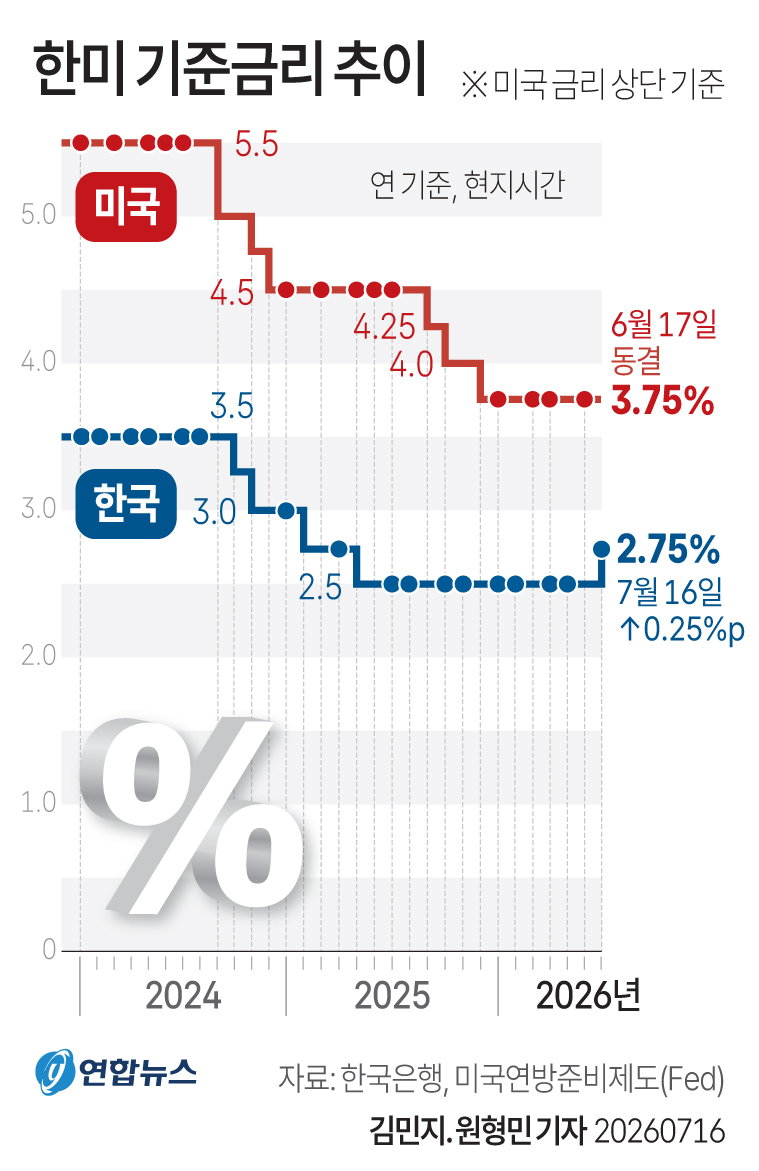
한미 기준금리 추이(Photo : [연합뉴스 제공])
▲ Prolonged Middle East War Stimulates Inflation
As the Middle East war, which began with U.S. and Israeli airstrikes on Iran in late February, has prolonged, international crude oil prices surged and affected domestic prices.
Brent crude prices soared from around $72 per barrel before the war to $126 by the end of April, driving energy price increases.
The consumer price inflation rate rose from 2.0% in January-February to 2.2% in March and 2.6% in April, followed by 3.1% in May and 3.2% in June, marking two consecutive months in the 3% range.
The rate of increase in the living cost index also steadily rose from 1.8% in February to 3.4% in June, expanding the burden of perceived inflation.
The Bank of Korea's concern is interpreted as stemming from worries about secondary inflationary effects as rising oil prices spread beyond energy prices to general commodity prices.
▲ Clear Economic Recovery…Expectations for Upward Revision of Growth Outlook
Meanwhile, the domestic economy has shown clear signs of recovery, centered on robust semiconductor exports.
The real GDP growth rate for the first quarter of this year was 1.8%, the highest level since the third quarter of 2020, while nominal GDP growth also reached 10.5%, the highest since 1976.
Financial markets are also forecasting that this year's current account surplus will significantly exceed last year's record.
The government has set its economic growth outlook for this year at 3.0%, and the Bank of Korea is expected to have a high possibility of revising its growth forecast upward from the existing 2.6% in its August economic outlook.
Markets believe that if growth above the potential growth rate continues, the need to maintain low interest rates will increasingly diminish.
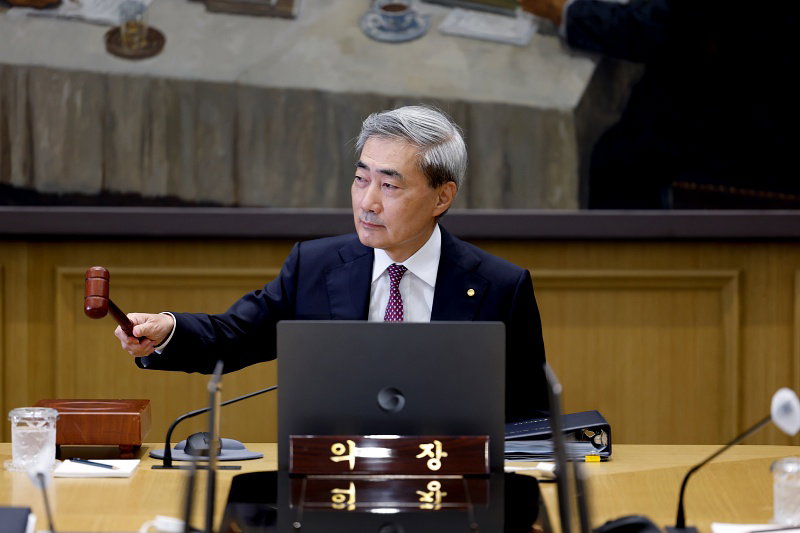
한은, 기준금리 0.25%p 인상(Photo : [연합뉴스 제공])
▲ Household Debt and Property Prices Also Rate Hike Factors
The acceleration of household debt growth was also cited as a major factor supporting the rate increase.
At the end of last month, household loans in the banking sector increased by 7.6 trillion won from the previous month, recording the largest increase since August 2024.
The increase in housing transactions ahead of the expiration of the tax surcharge exemption on multi-property capital gains is analyzed as subsequently leading to increased lending with a time lag.
Seoul apartment prices also showed high appreciation at an annual rate of 10-15% as concerns about supply shortages coincided with expectations for further increases.
Accordingly, financial markets have raised assessments that monetary tightening was inevitable to curb the expansion of household debt and real estate price increases.
▲ Narrowing Korea-U.S. Rate Differential…Expectations for Won Stability
With the benchmark rate increase, the policy rate gap between Korea and the United States has narrowed from the existing 1.25 percentage points to 1.00 percentage point.
This is the smallest rate differential since March 2023, and the Bank of Korea expects that the narrowing of the Korea-U.S. rate differential could have a positive impact on stabilizing the won's value and easing foreign exchange market volatility.
The won-dollar exchange rate has also declined from around 1,560 won to the 1,480 won range recently, but still maintains a level above the long-term average, with exchange rate stability also identified as a major policy consideration factor.
▲ Possibility of Additional Rate Increases in Focus
Bank of Korea Governor Shin Hyun-song has recently made multiple public statements regarding the need for benchmark rate increases, hinting at tightening possibilities.
The dot plot reflecting the Monetary Policy Committee members' rate forecasts also showed that the majority of members expect future rate increases.
The decision is also analyzed as being influenced by the continuation of global monetary tightening as major central banks including the European Central Bank and the Bank of Japan have followed with rate increases.
Markets are anticipating that the Bank of Korea may additionally raise the benchmark rate by 0.25 percentage points in August or October of this year.
Governor Shin is scheduled to directly explain the background of this rate increase and the future direction of monetary policy operations through a press briefing on the day.
Copyright © JKN. Unauthorized reproduction or redistribution prohibited.