Turkey is drawing international attention as it pursues a high-level diplomatic gamble to transfer its Russian-made S-400 air defense system to the United Arab Emirates in hopes of regaining access to America's latest F-35 stealth fighter jets.
According to a Wall Street Journal report on July 18 (local time), Turkey is reportedly in discussions to transfer the S-400 air defense system it acquired from Russia in 2019 to the UAE. This is understood to be part of Turkey's key efforts to acquire the U.S. F-35 fighter jets.
Turkey suffered a major blow in 2019 when it acquired the S-400 system, resulting in its exclusion from the F-35 joint development and production program. At that time, the U.S. raised concerns that classified information about the F-35's radar reflection characteristics and other stealth-related secrets could be exposed to the Russian air defense system. As a result, Turkey lost billions of dollars in defense contract opportunities and faced setbacks in its air force modernization plans.
The UAE, which has emerged as a new partner in Turkey's S-400 transfer initiative, has shown strong interest in acquiring the S-400 after experiencing Iranian drone and missile attacks this year, feeling an urgent need to strengthen its air defense capabilities. As the interests of both countries align, discussions on the S-400 transfer appear to be gaining momentum.
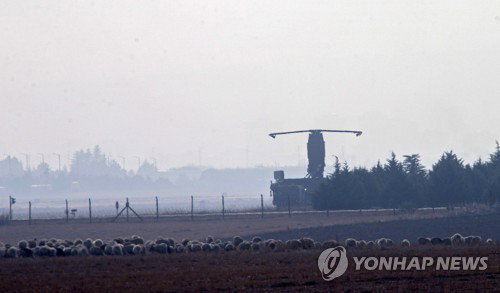
[Photo=Yonhapnews]
However, the S-400 transfer and F-35 acquisition process is fraught with complex obstacles. First, the third-party transfer of the S-400 requires approval from Russia, the manufacturing country. Additionally, for the UAE to acquire the S-400, it must obtain consent from both Russia and the United States. Moreover, Turkey's acquisition of the F-35 requires compliance with U.S. legal requirements and approval from the U.S. Congress, where opposition from some pro-Israel lawmakers is expected, making the path forward extremely difficult.
Meanwhile, former U.S. President Donald Trump offered a glimmer of hope at a recent NATO summit by mentioning consideration of lifting restrictions on Turkey's F-35 purchase. However, whether Trump's remarks will actually lead to F-35 acquisition remains uncertain, revealing the complex landscape of domestic U.S. politics.
Turkey's push to transfer the S-400 demonstrates strong determination to acquire the F-35, but the process is expected to be difficult given the complex interests of multiple countries including Russia, the United States, and the UAE, as well as domestic political obstacles. Despite efforts to dispose of the S-400, F-35 acquisition is not guaranteed, and significant time and diplomatic efforts will likely be needed before a final decision. This case will serve as an important example showing that weapons transactions between allies can be influenced not merely by economic and military considerations, but by complex geopolitical dynamics and domestic politics.
Copyright © JKN. Unauthorized reproduction or redistribution prohibited.