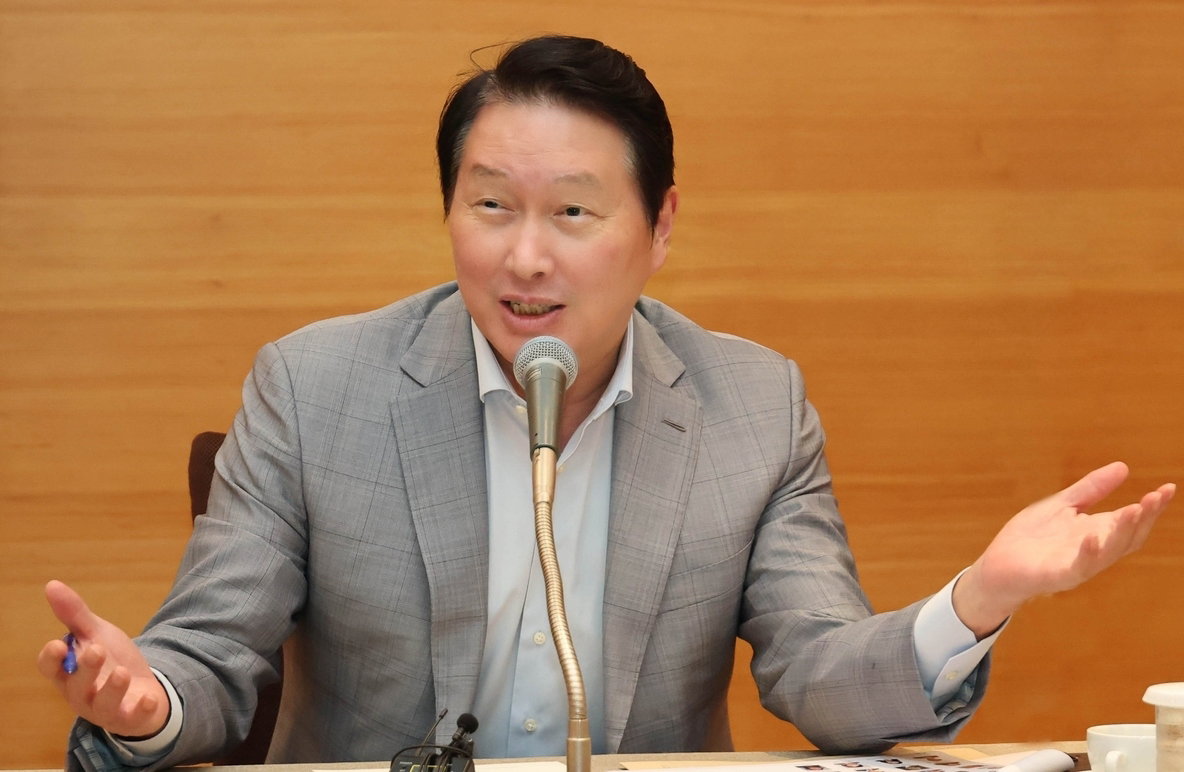
At a press conference held on the 19th during the Korea Chamber of Commerce and Industry Jeju Forum in Jeju, Chairman Chey stated, "Even limiting it to just the AI sector, demand is expected to increase by at least 60-100% next year compared to this year, and looking at semiconductors overall, we should expect an increase of at least 50-60% or more." Meanwhile, he characterized the increase in supply next year as "virtually none," diagnosing that the supply-demand gap will inevitably widen far more than this year.
Regarding the severity of the supply crisis, he said, "It's not just companies but governments of each country that have national security issues at stake. Production only moves when we secure memory semiconductors and distribute them to companies," adding, "We're facing enormous lobbying and pressure." He further warned, "For now it's companies facing pressure, but going forward, there's a high likelihood that governments will also begin experiencing pressure from other governments." Regarding U.S. Commerce Secretary Howard Lutnick's request for investment in America, he calmly responded, "We've been saying the same thing all along. Nothing new about it."
Accordingly, Chairman Chey identified accelerating expansion speed and scale as top priorities. "We need to build not only in Honam but also in the United States if possible. We need to search the entire world, prioritize where we can build fastest and largest, and construct quickly—this has become like a lifeline," he emphasized.
Regarding concerns that rapid supply expansion could lead to an early end of the supercycle, he firmly pushed back. "Current prices are abnormal. They need to fall," he said, adding, "If chipflation intensifies, we'll inevitably take a hit. We can only maintain and develop Korea's semiconductor industry while protecting and growing the market."