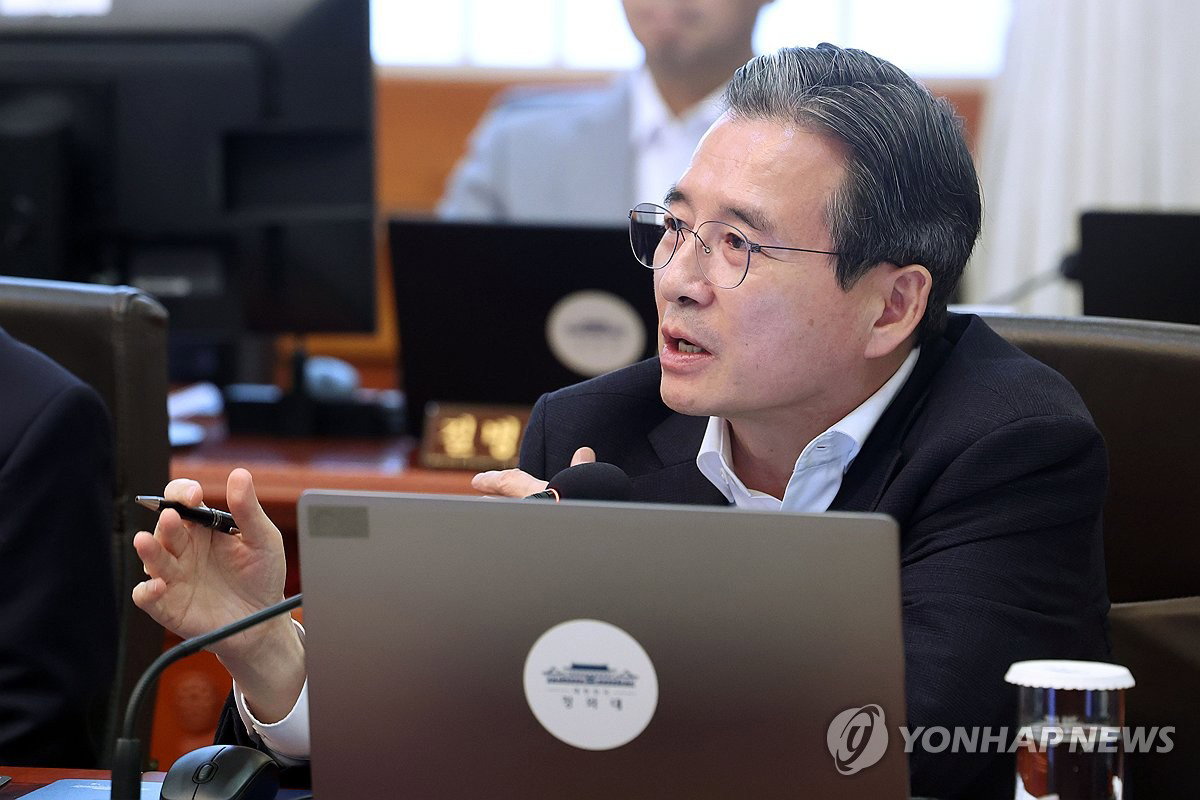
Director Kim appeared on KBS's "Sunday Diagnosis Live" and said, "Investors are already investing in these products and the market size has already formed over 10 trillion won," adding, "If we were to delist them, that itself would cause a tremendous shock to the market." He then countered, "Wouldn't we need to resolve those selling pressures?"
Regarding supplementary measures recently announced by authorities, including increasing the basic deposit requirement for leveraged ETF transactions to 30 million won in cash and allowing transactions in units of 20 shares, he predicted that "it will be able to resolve a considerable portion of side effects." However, he noted that "leveraged products have an aspect where their impact doubles during market downturns," suggesting that further discussions among authorities, asset management companies, and securities firms are necessary. He particularly emphasized the need to minimize the divergence rate—the difference between an ETF's net asset value (NAV) and its actual market price—explaining that "we can further discuss ways to appropriately manage the selling pressure to match the divergence rate."
He also stated his position on the real estate "triple strength" issue. Regarding the phenomenon of simultaneous increases in sales prices, jeonse prices, and monthly rent, Director Kim expressed regret, saying, "We are truly sorry to many citizens." As supply expansion measures, he proposed activating private rental purchases for non-apartment properties, private officetel supply, converting commercial land in the third new cities for residential use, and allowing dedicated officetels in Seoul commercial buildings. However, regarding redevelopment and reconstruction projects, he drew a line, saying these are "not a magic solution" and "take at least 3 to 5 years," making it difficult to expect short-term effects. Regarding the use of Seoul's semi-industrial zones, he said he had scheduled a separate meeting with Seoul Mayor Oh Se-hoon.
Regarding real estate tax system reform, he reconfirmed the principle of differentiating between multi-property owners and single-property owners, and applying different rates based on whether the property is owner-occupied. He conveyed that there is a direction to apply separate standards for ultra-luxury owner-occupied single properties as well.