In the first half of this year, miscellaneous loans from the five major commercial banks exceeded their target by approximately 2.4 trillion won, raising alarms about household loan management. As demand for "debt investment" (borrowing money to invest) through credit loans has surged, banks are tightening regulations on mortgage loans, but concerns are also being raised that the financial burden on real-need borrowers could increase.
Demand for so-called "debt investment" centered on credit loans and overdraft accounts has expanded, resulting in loan growth that far exceeds banking sector management plans.
According to data submitted to the National Assembly's Political Affairs Committee by Rep. Lee Yang-soo of the People Power Party on the 22nd, as of the end of June this year, miscellaneous loans from the five major banks increased by a total of 3.4658 trillion won. This is approximately 2.4 trillion won more than the combined miscellaneous loan target of 1.0924 trillion won initially set, representing approximately 3.2 times the target level.
▲ Woori and Hana Banks Show Prominent Increases
By bank, the increase in miscellaneous loans at Woori Bank and Hana Bank was particularly notable.
Woori Bank executed 1.0696 trillion won, equivalent to 8.2 times its target of 131 billion won, while Hana Bank recorded 759.9 billion won, or 8.9 times its target of 85.6 billion won.
Shinhan Bank also executed 708.8 billion won, 6.7 times higher than its target of 105.8 billion won, while KB Kookmin Bank saw an increase of approximately 1.18 trillion won, about twice its target of 595 billion won.
In contrast, NH Nonghyup Bank, which targeted an increase of 175 billion won, actually saw a decrease of 252.5 billion won, showing a contrasting trend from other banks.
▲ Mortgage Loans Maintain Reduction Trend
While miscellaneous loans surged, mortgage loans generally maintained a downward trend.
KB Kookmin Bank reduced mortgage loans by 1.3149 trillion won by the end of June, approaching its reduction target of 1.4096 trillion won.
Woori Bank reduced mortgage loans by 502.9 billion won, far exceeding its reduction target of 91.9 billion won, implementing the most stringent management.
Shinhan Bank and Hana Bank also reduced mortgage loans by 696.5 billion won and 226.9 billion won, respectively, but fell somewhat short of their initial targets.
Meanwhile, NH Nonghyup Bank saw mortgage loans increase by 1.6954 trillion won, far exceeding the target increase of 260 billion won, indicating increased loan management burdens.
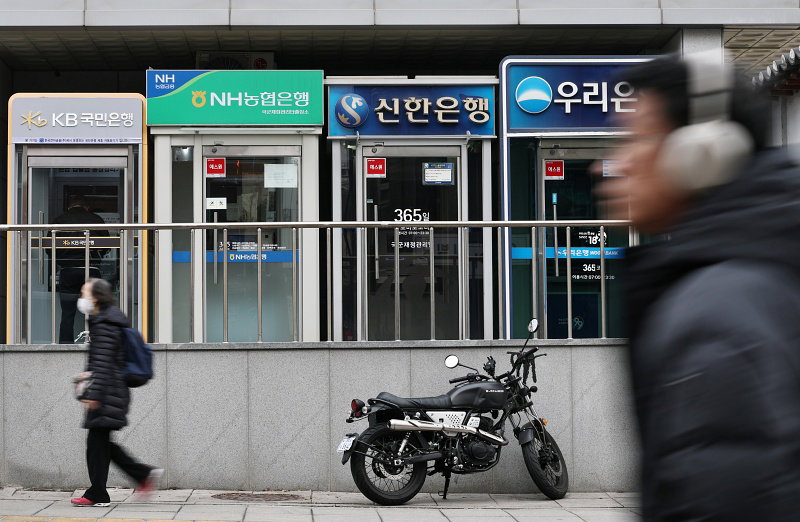
Loans [Provided by Yonhapnews]
▲ Background for Strengthened Household Loan Management
NH Nonghyup Bank is the only one among the five major banks that has already exceeded its annual overall household loan target of 870 billion won.
Other banks are also reported to have exceeded their first-half targets.
It is analyzed that the banking sector has adopted a strategy of increasing management intensity focused on mortgage loans, which are relatively controllable, since credit loans such as overdraft accounts are difficult to limit.
KB Kookmin Bank reduced its mortgage loan limit from the existing 600 million won to 300 million won early this month, while major banks have implemented additional measures such as temporarily suspending loan applications through loan recruitment channels or restricting mortgage insurance enrollment.
According to Yonhapnews, a financial authority official explained, "While credit loans are difficult to limit, mortgage loans are manageable and their scale is large, so banks appear to be focusing management on mortgage loans."
▲ Concerns Over Expanded Burden on Real-Need Borrowers
There are also concerns that the banking sector's tightening of mortgage loans is expanding the financial burden on real-need borrowers.
Financial authorities have clarified their position to maintain the macro-management approach to household debt.
Shin Jin-chang, secretary-general of the Financial Services Commission, stated in a pre-briefing on business reports, "In the current situation, easing the household debt management approach could stimulate the real estate market," adding "We are not currently considering ways to ease the household loan growth target of 1.5%."
However, the door remains open to exploring limited support measures for certain real-need borrowers such as young people.
President Lee Jae-myung stated at a cabinet meeting that day, "Real estate issues must normalize so that productive reinvestment of resources is possible and social dynamism is restored," and "We will prepare comprehensive real estate supply measures with momentum and support measures for real-need borrowers suited to reality."
Rep. Lee Yang-soo pointed out that due to the authorities' focus on regulation, funding procurement for ordinary real-need borrowers is effectively being blocked.
Copyright © JKN. Unauthorized reproduction or redistribution prohibited.