Kevin Warsh, the new chairman of the U.S. Federal Reserve (Fed), has established a policy task force that may propose some changes to how monetary policy is conducted. However, given the broad consensus within the Federal Open Market Committee (FOMC), forecasts suggest incremental improvements rather than sweeping reforms.
▲ Goldman Sachs: "Internal Fed Consensus Limits Scope of Reform"
According to Investing.com on the 26th (local time), Goldman Sachs stated in a recent report that the five task forces launched by Chairman Warsh are likely to reflect some of his existing concerns while preparing compromises that can be accepted by the majority of members within the Fed.
The task force operates around five areas: the Fed's policy communication, balance sheet management, economic data utilization, artificial intelligence (AI), and inflation targeting framework.
▲ Possible Adjustments to Economic Outlook Disclosure Methods
Goldman Sachs forecasts that in the Fed's policy communication sector, some revisions to the Summary of Economic Projections (SEP) will be the most realistic change.
In particular, it predicted that the deletion of the "median" currently disclosed in economic outlooks could be reviewed.
This is a measure to alleviate the market's perception that the median represents the official stance of the Federal Open Market Committee.
However, it was expected that the Fed would maintain a cautious stance toward reforms that significantly retreat from policy transparency.
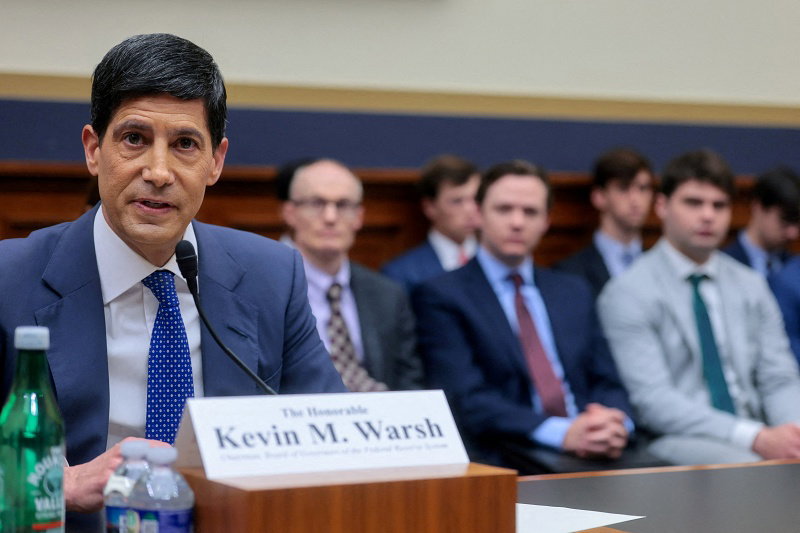
Federal Reserve Chairman Kevin Warsh (Photo: [Reuters/Provided by Yonhapnews])
▲ Balance Sheet Management Expected to Continue Despite Quantitative Easing Criticism
Goldman Sachs assessed that the Fed is unlikely to abandon the current ample reserves system.
While Chairman Warsh has consistently criticized quantitative easing (QE) and large-scale balance sheet expansion policies, there is a strong consensus within the Fed to maintain the existing operating system.
However, it forecasted that adjusting the composition ratio of U.S. Treasury securities held by the Fed could be discussed.
Nevertheless, as the U.S. Treasury Department could adjust its debt issuance strategy, the impact on markets would be limited.
▲ Expanded Use of Private Data…Official Statistics Maintained
In terms of economic data utilization, there is a possibility that the scope of private data utilization will expand.
Goldman Sachs expected that there would be changes in actively utilizing various data from the private sector in policy decisions.
However, since private data has limitations in representativeness, seasonal adjustment, and long-term continuity, it is expected to remain supplementary rather than replacing official economic statistics.
▲ Limited Monetary Policy Changes Despite AI Optimism
Chairman Warsh has expressed the view that artificial intelligence (AI) will enhance productivity and become a structural deflationary factor that lowers prices in the long term.
However, Goldman Sachs forecasted that most Fed officials will not change the monetary policy stance based solely on future productivity prospects that still carry considerable uncertainty.
While acknowledging the potential for AI development, it is expected that more cautious approaches will continue in actual policy decisions.
▲ Inflation Targeting Framework Also Expected to Receive Minor Enhancements
Goldman Sachs assessed that the Fed's inflation targeting framework is likely to be maintained in its overall framework.
However, it forecasted that there could be limited changes in the level of more actively referencing indicators such as money supply in the policy decision-making process.
This means changes will be limited to adding some complementary elements while maintaining the existing inflation-focused monetary policy framework.
Copyright © JKN. Unauthorized reproduction or redistribution prohibited.