The End of Forward Guidance and the Beginning of New Monetary Policy
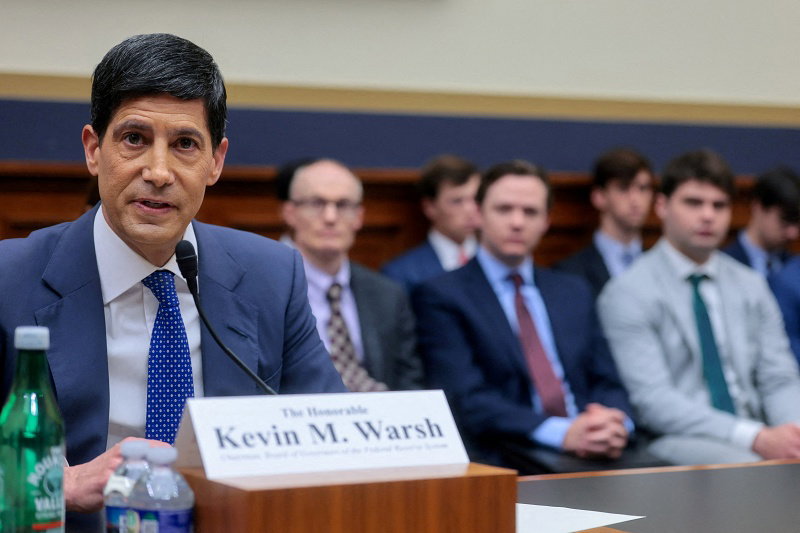
On June 17, 2026, the Federal Open Market Committee (FOMC) chaired by newly appointed Kevin Warsh, Chairman of the Federal Reserve System (Fed), unanimously held the benchmark interest rate steady at 3.50%-3.75%. What captured the attention of the financial community more than the widely anticipated interest rate freeze was the Fed's official elimination of "Forward Guidance," a practice of pre-announcing future policy paths. As this advance notice mechanism, actively used during the tenures of former Chairs Ben Bernanke and Jerome Powell to mitigate market shocks, has disappeared, global financial markets now face a new paradigm in which asset pricing must rely entirely on real-time economic data rather than Fed verbal intervention.
Price Stability as Top Priority and the Revival of Data Dependency
Behind the Fed's elimination of forward guidance and implementation of a "hawkish pause" lies recently resurgent inflation pressure and a resilient labor market capable of withstanding high interest rates. According to the U.S. Department of Labor, the U.S. Consumer Price Index (CPI) rose 4.2% year-over-year in May, more than double the Fed's long-term inflation target of 2.0%. This is a consequence of geopolitical disputes in the Middle East, including Iran, intensified since March, which have triggered sharp increases in oil and energy prices. The core CPI inflation rate, excluding volatile energy and food, showed some moderation at 2.9%, but overall price pressures continue to weigh heavily on policymakers.
Simultaneously, the U.S. economy is demonstrating strong resilience to withstand restrictive interest rate levels. Nonfarm payrolls increased by 172,000 in May, and the unemployment rate remained stable at 4.3%. During a press conference, Chair Warsh emphasized that "price stability is our choice, and we will reach it," expressing strong determination to control inflation. In particular, by not submitting his own forecast to the Dot Plot, which shows future interest rate projections, he made clear that future monetary policy decisions will be made on a thorough, real-time data-dependent basis, rather than being constrained by committee members' subjective predictions.
Expanded Market Volatility and Full-Scale Overhaul of the Federal Reserve
Financial markets must now move beyond interpreting the rhetorical statements of Fed officials and directly respond and adapt to objective macroeconomic indicators released each month. The key short-term variables that will determine the direction of capital markets are the subtle fluctuations in monthly Consumer Price Index (CPI) and Nonfarm Payrolls (NFP) figures. Whether energy supply chain disruptions caused by geopolitical risks will be resolved and price pressures will stabilize downward, or whether they will become entrenched, prompting the Fed to actually deploy additional rate hike tools, is the market's primary concern.