The complaints of Korean women approaching menopause about "tossing and turning all night and being exhausted" were not mere grievances. According to Samsung Electronics' analysis of the world's largest smartwatch data, Korean women sleep an average of 25 minutes less than Western women, and the decline in sleep quality begins in the early 30s—more than 20 years earlier than Western women—a shocking fact revealed on August 1, 2026.
Samsung Electronics and a joint research team from the United States and Canada published these research results in the latest issue of the international academic journal 'Sleep.' The research team analyzed sleep data from approximately 3.8 million nights recorded on Galaxy Watch from 192,500 women aged 20 to 65 in the United States, Korea, Germany, France, and the United Kingdom. This is the world's largest smartwatch sleep data analysis.
The key indicator of this study is 'wake time after sleep onset (WASO),' which refers to the time spent awake between falling asleep and finally waking up, and is an indicator showing how often and how much a person tosses and turns throughout the night.
As age increased, women's WASO increased significantly. Compared to women aged 20-24, those aged 50-54 were awake an average of 5.4 minutes longer (15.3%), those aged 55-59 were awake 8.8 minutes longer (24.9%), and those aged 60-64 were awake 11.2 minutes longer (31.7%). Since the increase in WASO was greater than the decrease in actual sleep time (13 minutes in early 50s, 17 minutes in early 60s), it was confirmed that for women after middle age, 'inability to maintain sleep' is a bigger problem than 'sleeping less.'
Notably, women showed the largest increase in wake time when transitioning from ages 45-49 to 50-54, suggesting the impact of hormonal changes during menopause and perimenopause. Men show similar changes only around age 60.
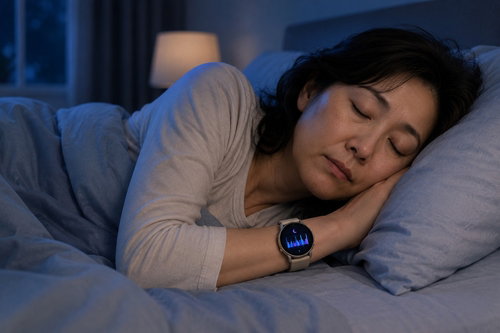
Among these research findings, the sleep conditions of Korean women are even more shocking. Korean women were found to sleep an average of 25 minutes less than Western women (from the United States, Germany, France, and the United Kingdom). Moreover, the onset of increased nighttime waking begins in the early 30s, significantly earlier than Western women (around age 50), occurring more than 20 years earlier.
The research team suggested that long working hours culture, late bedtime, high social stress, and lifestyle habits unique to Asia may have influenced this peculiarity in Korean women.