Seoul City is accelerating the eco-friendly transition of internal combustion two-wheeled vehicles such as delivery motorcycles by launching a dramatic support program that allows consumers to purchase electric two-wheeled vehicles priced in the 4.5 million won range for around 1 million won. From August 3rd to December 4th, the city plans to supply an additional 641 electric two-wheeled vehicles to simultaneously reduce fine dust and noise while alleviating the burden on small business owners.
Seoul City announced on the 2nd that it will implement the '2026 Second Half Electric Two-Wheeled Vehicle Private Supply Project' from August 3rd to December 4th. Through this project, the city will supply an additional 641 electric two-wheeled vehicles, including 353 for delivery, 256 for general use, and 32 for priority distribution. Applicants must be individuals who have resided in Seoul for at least 30 days or individual business owners and corporations with business locations for at least 30 days. Individuals can apply for up to 1 vehicle, individual business owners for up to 5 vehicles, and corporations for up to 50 vehicles. Small business owners, people with disabilities, low-income households, and farmers are eligible for priority distribution.
In particular, this supply project has significantly reduced the actual purchase price of electric two-wheeled vehicles through various subsidies and discount benefits. In addition to national and city-level basic subsidies, consumers can receive 300,000 won in national funds when scrapping old vehicles, and small business owners, vulnerable groups, and farmers can receive an additional 20% subsidy from both national and city funds. Delivery motorcycles receive an additional 10% from national funds and 30% from city funds, while battery-swapping models receive an additional 50% from city funds. When manufacturers participate in their own discount programs, an additional discount of 100,000 to 150,000 won is applied, and residents can also receive 200,000 won in city subsidies through regional hub specialized projects. When all these benefits are combined, it is possible to purchase 4.5 million won products for actually around 1 million won. By vehicle type, subsidies range from a maximum of 1.4 million won for compact models to 3 million won for large models, and for shared battery-swapping models, from 980,000 won for compact models to 1.6 million won for small models.
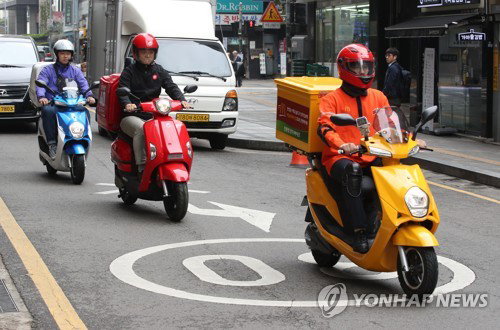
Seoul City's project plays a key role in reducing fine dust and noise generated by internal combustion two-wheeled vehicles and expanding eco-friendly delivery systems. Another major goal is to enhance the convenience of operating electric two-wheeled vehicles through the spread of KS battery standards and the establishment of shared battery-swapping facilities. This reflects the city's commitment to protecting the environment while simultaneously improving the quality of life for Seoul residents.