The Korean-style evidence disclosure system (K-Discovery) introduced in January 2026 has become embroiled in controversy over its effectiveness, with concerns that it could become a shield for perpetrating large corporations rather than a source of hope for SMEs victimized by technology theft. The key issue is the 'attorney-client privilege' clause newly added to the Act on Promoting Mutual Growth and Cooperation between Large and Small-Medium Enterprises (Mutual Growth Act).
The K-Discovery system, which was introduced through amendments to the Mutual Growth Act in order to resolve the reality that SMEs damaged by technology theft face difficulties in securing evidence, is now being pointed out as potentially being abused as a means of evidence concealment by perpetrating large corporations ahead of its implementation. According to Article 40-7 of the Mutual Growth Act, not only communications between attorneys and clients but also materials prepared by attorneys for litigation preparation are excluded from expert investigation subjects. This raises concerns that large corporations could abuse this clause to refuse submission of key evidence, thereby neutralizing the original purpose of the system.
The Gyeongchung Foundation for Listening criticized that "the technology theft prevention law could instead be abused as a means of concealing key evidence" and pointed out that "if it is a law to protect the weak, exception provisions rather than broad guarantees of confidentiality would be in line with the legislative intent." The concern is that the attorney-client privilege clause could be applied too broadly.
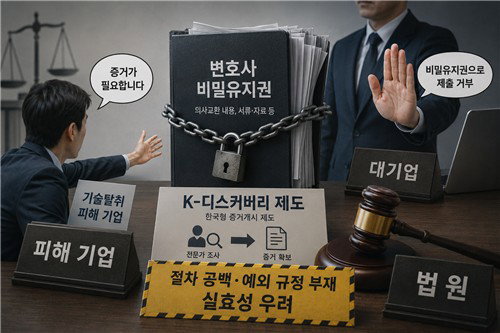
Behind such controversy are loopholes in past legislative processes. When the Attorney-at-Law Act amendments were discussed in December of last year, the Ministry of Justice proposed the introduction of a 'necessity exception' by referring to the U.S. 'work product doctrine.' This is a principle that even if certain materials are subject to attorney-client privilege, they should be exceptionally disclosed when essential for discovering truth and implementing justice. However, during parliamentary discussions, this exception clause was not included in Article 26-2 of the Attorney-at-Law Act, and ultimately the Mutual Growth Act came to invoke attorney-client privilege without such exceptions. This presents a contrast in that while the U.S. pursues truth discovery through the 'necessity exception,' Korea has blocked that path.