The Middle East situation, on the brink of explosion, has reached a dramatic turning point under the caveat of "rapid agreement" following President Donald Trump's surprise announcement of the cancellation of military operations against Iran.
In the early hours of today (August 2, 2026), President Trump announced the sudden cancellation of military operations against Iran that were scheduled for 10 p.m. local time on the 1st. This represents a major announcement that has shocked the world, as military action that appeared to be on the verge of execution mere hours later was suddenly halted. President Trump explained that this was because Iran and other Middle Eastern countries had requested that "any attacks be withheld as agreement on the framework for an agreement has been reached," suggesting that this decision is the result of diplomatic efforts to ease tensions.
The cancellation of the attack comes with "the condition that an agreement can be reached rapidly." The core of this agreement is the immediate, complete, and comprehensive opening of the Strait of Hormuz, a major crude oil transport route in the Middle East region, and the end of Iran's nuclear threat. Israel has also expressed its willingness to participate in President Trump's commitment, emphasizing joint efforts for security and peace in the Middle East region. This represents the international community's firm stance against Iran's military threat.
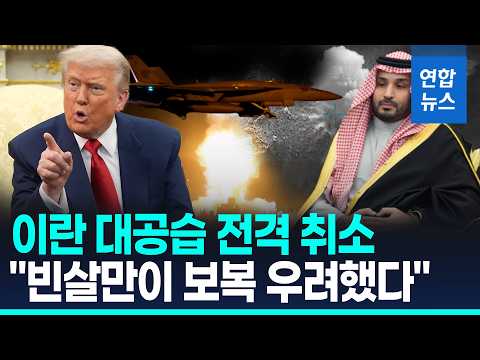
However, the specific background behind the sudden cancellation of the imminent military operation remains unclear. In this hair-trigger crisis situation, the international community's curiosity about what behind-the-scenes work and diplomatic negotiations took place behind this abrupt decision is growing.