Do you find the word 'exchange rate' somehow difficult and complex? However, exchange rates are deeply connected to various aspects of our lives and economic activities, from overseas travel and direct purchasing to corporate management and the overall national economy. Fluctuations in exchange rates sometimes make our wallets happy and sometimes burden them. This article explains, with easy and clear examples, the basic concept of exchange rates, why they fluctuate, and how these fluctuations specifically affect our daily lives, businesses, and investments. Through this article, you will gain a clear understanding of exchange rates and acquire the knowledge to respond wisely. Now, shall we embark on a journey into the world of exchange rates together?
Exchange Rate, Why Is It So Important to Us?
An exchange rate means the ratio of exchange with another country's currency. For example, if 1 dollar equals 1,300 won, this means that 1 U.S. dollar can be exchanged for 1,300 Korean won. When traveling abroad or purchasing items from overseas, we obtain local currency or pay for products in won according to this exchange rate. In this way, exchange rates serve not merely as a simple exchange ratio but as a standard for international transactions and, furthermore, an important indicator reflecting the health of a country's economy.
Exchange rates indirectly affect our daily lives through overseas travel expense calculations, price changes when making international direct purchases, and fluctuations in study abroad living costs. You've likely seen the phrase on international shopping websites stating "When paying in won, the exchange rate is 1 dollar per 1,300 won based on today's rate." If the rate drops to 1,200 won, you can purchase the same item more cheaply, and if it rises to 1,400 won, you must pay more. In this way, every time we engage in international economic activities, exchange rates directly affect our purchasing power and consumption patterns, allowing us to experience the importance of exchange rates in our daily lives.
Now that you understand what an exchange rate is, you'll likely be curious about why exchange rates continue to change. In the next section, we'll explore the main principles of exchange rate fluctuations.
Why Do Exchange Rates Go Up and Down? – Uncovering the Principles of Fluctuation
Exchange rates are not fixed but constantly fluctuate. These fluctuations, much like changes in goods prices in the market, often move according to the law of supply and demand. For example, when more people in Korea want to buy dollars (increased dollar demand), the value of the dollar rises, and consequently, the won/dollar exchange rate increases. Conversely, when more people want to sell dollars (increased dollar supply), the dollar's value falls, and the exchange rate declines.
The main factors affecting exchange rate fluctuations are as follows.
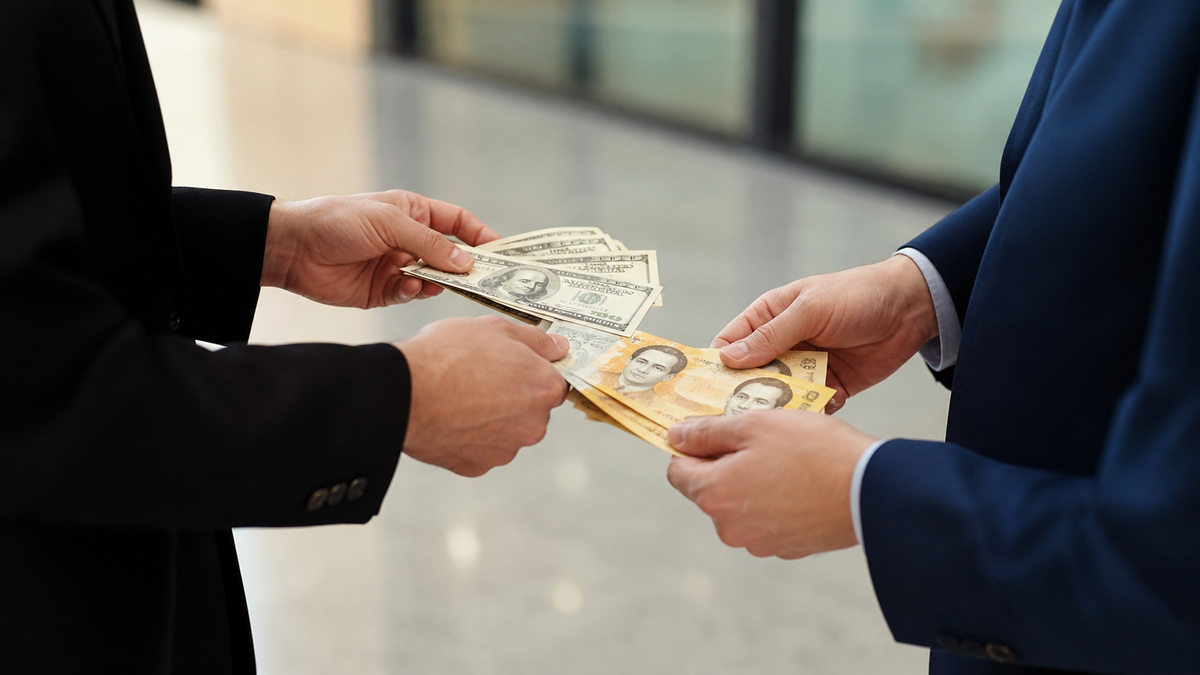
[Photo=Impact of Exchange Rate on Economy]
- Differences in Interest Rates Between Countries: If interest rates differ between Korea and the United States, there is a tendency for investment capital to flow to the country offering higher interest rates. For example, if the U.S. interest rate is higher than Korea's, investment funds from Korea are converted into dollars and flow out to the United States, which increases dollar demand and becomes a factor in exchange rate appreciation.
- Economic Growth Rate and Trade Balance: When a country's economic growth rate is high, the possibility of foreign investment inflow increases, which can raise the value of that country's currency. Additionally, when exports exceed imports, resulting in a trade surplus, the inflow of foreign currency increases, and there is a tendency for the home country's currency value to rise (exchange rate decline).
- Political Stability and International Oil Prices and Other External Variables: A country's political instability, war, or unexpected events like natural disasters can cause capital outflows and have sudden impacts on exchange rates. Additionally, fluctuations in international oil prices affect South Korea's current account as an oil-importing country, becoming a factor in exchange rate fluctuations.
In this way, exchange rates are in constant flux due to the interaction of complex economic indicators and external variables. Now that you understand why exchange rates change, let's examine how these fluctuations specifically affect our personal lives.
Does My Wallet Dance? The Impact of Exchange Rates on Our Daily Lives
Exchange rate fluctuations have more direct impacts on our daily lives than we might think, and we can feel this impact particularly strongly in consumption activities related to overseas transactions. Let's look at the most representative cases where our wallets move with exchange rates.
- Overseas Travel Expenses: When the won/dollar exchange rate rises (won weakens), we must pay more won to purchase the same amount of dollars. In other words, overseas travel expenses become more expensive. Conversely, when the exchange rate falls (won strengthens), we can exchange the same dollars for fewer won, allowing travel expenses to be reduced.
- International Direct Purchases and Subscription Services: Exchange rates also affect us when purchasing items from overseas shopping malls like Amazon and AliExpress, or using overseas subscription services like Netflix and Spotify. When the exchange rate rises, the prices of overseas products become more expensive; when it falls, they become cheaper, changing our purchasing power for overseas consumption.
- International Student Tuition and Living Expenses: For international students studying abroad or families with children studying overseas, exchange rates are a very important factor. When the exchange rate rises, tuition and living expenses paid in dollars increase significantly in won-based terms, adding financial burden. Conversely, when the exchange rate falls, financial burden can be reduced.
- Import Price Increases: Exchange rate appreciation indirectly affects domestic prices. Korea imports energy resources and various raw materials from overseas, and when the exchange rate rises, import unit costs increase, which leads to price increases for products sold domestically, sometimes burdening consumer prices.
In this way, exchange rates affect not only overseas consumption activities but also domestic prices, directly impacting our wallets. Beyond personal daily life, exchange rates have enormous effects on larger-scale businesses and the national economy. Next, let's examine the impact on businesses and the broader economy.
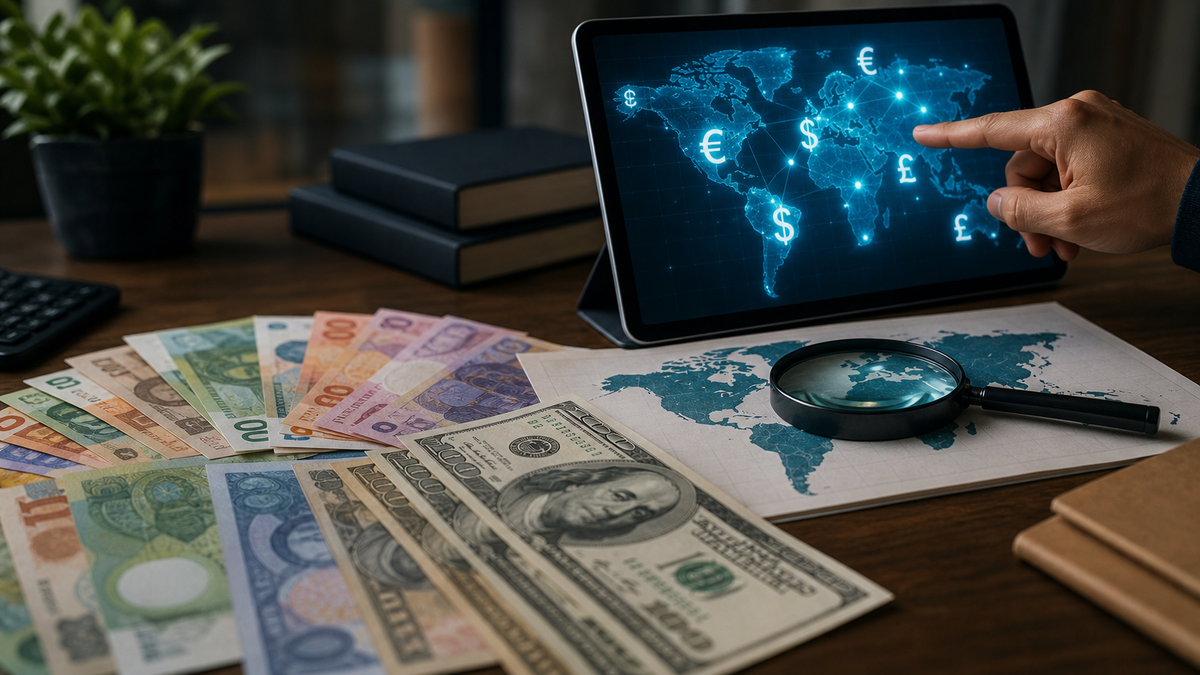
[Photo=Exchange Rate Fluctuations, Smart Response Strategies]
Corporate Fortunes and the Big Picture of National Economy: Do Import/Export Companies Laugh and Cry?
Exchange rate fluctuations are important variables that extend beyond individual wallets to determine corporate performance and the major flow of the national economy. For import/export businesses in particular, exchange rates are a matter directly linked to survival.
- Export Companies: Won weakness (exchange rate appreciation) works favorably for export companies. For example, when a Korean company exports a product worth 100 dollars, if the exchange rate rises from 1,200 won to 1,300 won, selling the same 100 dollars earns 120,000 won to 130,000 won in won terms. This secures price competitiveness and improves profitability. Conversely, when the won strengthens (exchange rate decline), the price competitiveness of export products decreases and profits decline, which is disadvantageous.
- Import Companies: Import companies experience the opposite effects of export companies. Won strength (exchange rate decline) is favorable for import companies. When importing raw materials worth 100 dollars from abroad, if the exchange rate falls from 1,300 won to 1,200 won, the cost of purchasing raw materials decreases from 130,000 won to 120,000 won. This leads to cost reduction and improved profitability. Conversely, during won weakness (exchange rate appreciation), import costs increase, increasing the company's burden.
From a broader national economy perspective, an appropriate level of exchange rate can have positive effects on price stability, job creation, and foreign investment attraction. For example, when exports increase, business production becomes active and employment can increase. However, sudden exchange rate fluctuations increase uncertainty for economic participants, which can suppress investment and cause economic instability. For certain industries, particularly those with high raw material dependence or export-oriented industries, fortunes vary depending on exchange rate fluctuations, having long-term effects on national competitiveness and industrial structure as a whole.
Like the impacts on businesses and the national economy, exchange rates are important variables in the world of investment. In the next section, we will intensively cover the relationship between investment and exchange rates.
Essential for Investors! The Impact of Exchange Rate Fluctuations on Your Investment Returns
In the world of investment, exchange rates are not merely numbers but important variables that determine investment returns. Particularly when investing in overseas assets, exchange rate fluctuations have enormous impacts on total investment returns in addition to price fluctuations in the investment products themselves.
- Foreign stock and bond investments: When investing in foreign stocks or bonds, you purchase assets in that country's currency and later sell them to convert back to Korean won. The difference in exchange rates between the time of purchase and sale has a decisive impact on your final return rate. For example, even if you earn a 10% return on U.S. stock investments, if the exchange rate drops by more than 10% when you sell the stocks and convert back to won, you could actually incur losses in won-based terms.
- Currency hedge and currency exposure concepts: Investors use various strategies to manage the risk of exchange rate fluctuations. Currency hedging is a strategy to avoid losses from exchange rate changes by using derivatives and other tools. Conversely, currency exposure is a strategy that exposes your investments directly to exchange rate movements, expecting additional returns when exchange rates rise. Many overseas investment fund products are offered as either "currency hedged" or "currency exposed" types.
- Correlation between commodity price fluctuations and exchange rates: Most international commodity prices, such as gold and crude oil, are priced in dollars. Therefore, not only commodity price fluctuations but also won/dollar exchange rate changes affect the returns of commodity-related investment products. When the exchange rate rises, commodities priced in dollars feel more expensive in won terms, which can affect the prices of related products.
- Investment strategies utilizing exchange rate volatility (basics of currency tech): Some investors seek profits by utilizing exchange rate fluctuations themselves. This is called currency tech, and typical examples include purchasing foreign currency when exchange rates are low, depositing it in foreign currency savings accounts or investing in foreign currency bonds, and converting back to won when exchange rates rise to earn the difference. However, since exchange rate predictions are very difficult, a cautious approach is necessary.
As such, exchange rates are important factors that directly impact investment returns, so when investing overseas, it is essential to understand the flow of exchange rates and develop appropriate investment strategies. Now that we've examined the various impacts of exchange rates, let's explore how to wisely cope with such volatility.
Navigating complex exchange rates with wisdom
Exchange rates are difficult to predict and move based on numerous variables, but that doesn't mean we can simply ignore them. It is necessary to understand the basic principles and impacts of exchange rates and make efforts to cope with them wisely. The following are practical methods for dealing with exchange rate volatility.
- Developing a habit of regularly checking exchange rate information: Develop the habit of periodically reviewing exchange rate trends for major currencies (especially the dollar) through bank apps or economic news. This helps you understand the bigger picture.
- Considering timing when exchanging currency for overseas travel or direct purchasing: If you're planning overseas travel, you can monitor exchange rate trends from a few months before and consider exchanging currency in installments when rates are relatively low. For overseas direct purchases as well, it's good to wait for exchange rates to fall before buying non-urgent items.
- Utilizing investment strategies such as diversified investment and currency hedging: When investing in overseas assets, you can consider not concentrating on a single currency but diversifying across multiple currencies, or using fund products that offer currency hedging functions to reduce the risk of exchange rate fluctuations. However, you should be cautious as hedging costs may be incurred.
- Acknowledging the difficulty of exchange rate prediction and maintaining a long-term perspective: Exchange rates experience significant short-term fluctuations and are difficult for even experts to predict. Rather than being overly reactive to short-term exchange rate changes, it is important to establish your own rational judgment criteria from a long-term perspective.
- Seeking expert advice and the importance of continuous learning: When necessary, seek advice from financial professionals, and continuously learn about exchange rates and international economic trends through related books and trustworthy economic content. This is greatly helpful in wise coping strategies.
While you cannot completely control exchange rates, if you understand and prepare for them, you can reduce the risks brought by fluctuations and seize opportunities. We hope your questions about exchange rates have been resolved to some extent. Finally, let's review the key points one more time through frequently asked questions.
Frequently Asked Questions (FAQ)
-
Q1: What is good and bad when exchange rates rise? (Korean won depreciation)
A1: When exchange rates rise (Korean won depreciation), export companies gain price competitiveness and benefit, and it helps attract foreign tourists. On the other hand, import prices increase, burdening domestic prices, and overseas travel, study abroad, and direct purchase costs increase, creating greater burden for individuals.
-
Q2: What is good and bad when exchange rates fall? (Korean won appreciation)
A2: When exchange rates fall (Korean won appreciation), import companies benefit as raw material import costs decrease, and individuals' overseas travel, study abroad, and direct purchase costs become cheaper. On the other hand, export companies face weakened price competitiveness, and the profitability of foreign investment coming into the country may decrease.
-
Q3: Who determines exchange rates?
A3: Basically, exchange rates are determined by supply and demand in the foreign exchange market. However, if sharp exchange rate fluctuations adversely affect the national economy, the government or central bank may intervene in the foreign exchange market to stabilize exchange rates.
-
Q4: How do I start currency tech?
A4: Currency tech is an investment that utilizes exchange rate movements, and typical methods include opening a foreign currency deposit account, subscribing to foreign currency RP (repurchase agreement) products offered by securities firms, or utilizing favorable exchange rates for low-cost foreign currency purchases. However, since exchange rate prediction is very difficult and loss risks exist, sufficient learning and careful investment are necessary.
Copyright © JKN. Unauthorized reproduction or redistribution prohibited.