Amid the chaos of Middle East conflicts hitting global supply chains, domestic refineries led a record improvement in performance with an 'earnings surprise' in Q2 2026, spearheaded by lubricating base oils. In particular, SK Innovation achieved a turnaround to profitability with operating profit exceeding 3 trillion won, while SK Enmoils, which handles the lubricant business, saw operating profit surge over 400%, emerging as the industry's cash cow product.
This remarkable performance turnaround stemmed from intensified shortages of lubricating base oils due to war damage to Middle East facilities. Notably, the 'Pearl GTL' facility within Qatar's Ras Laffan Industrial Complex suffered severe damage, with the suspension of production that had handled approximately 30% of global Group 3 lubricating base oil supply identified as the core cause. As a result, lubricating base oil spreads (profitability indicators), which were in the low $70s per barrel a year earlier, surged 2.5 times to the $180s in Q2 2026, significantly boosting refineries' profitability.
The domestic refining industry seized this crisis as an opportunity and advanced. SK Innovation recorded Q2 operating profit of 3.4873 trillion won, achieving a significant turnaround from operating losses of 401.6 billion won in the same period a year ago. Among these, SK Enmoils, which handles the lubricant business, led the performance improvement by achieving operating profit of 691.9 billion won, a 414.4% increase from 134.5 billion won in the same period a year ago. Approximately 80% of SK Enmoils' sales are generated overseas, proving effective absorption of global demand. S-Oil also achieved a turnaround to profitability in Q2, with operating profit expected to reach approximately 1 trillion won compared to -344 billion won in the same period a year ago. Lee Choong-jae, a researcher at Korea Investment & Securities, predicted that 'S-Oil's lubricating base oil division operating profit will exceed 1.5 trillion won this year.'
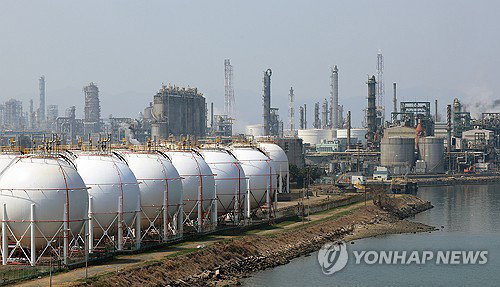
SK Enmoils holds the top global market share of 40% and, along with S-Oil, possesses large-scale production capacity, distinctive quality competitiveness, and a solid global sales network, earning recognition as a key alternative supply chain for Middle East-triggered supply shortages. The issue is that this will not be limited to short-term windfall gains. State-owned Qatar Energy mentioned 'the possibility of requiring over one year for Pearl GTL recovery,' declaring force majeure. Lee Dong-wook, a researcher at IBK Investment & Securities, analyzed that 'Group 3 lubricating base oil supply shortages are expected to continue structurally through 2027,' predicting that opportunities for the domestic industry will be prolonged.