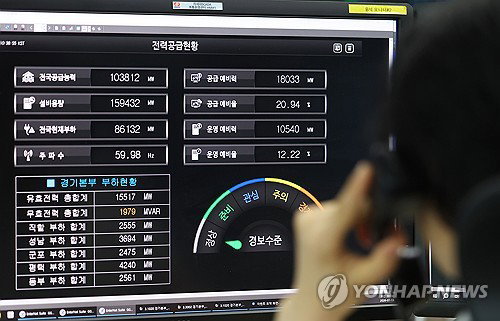
On August 2, 2026, when deadly heat waves exceeding 40 degrees Celsius continued for the fifth consecutive day in Yangsan, South Gyeongsang Province, and swept across the nation, the domestic power supply maintained stability while the government emphasized that there would be no problems even with record-breaking power demand expected in the third week of August, thanks to thorough countermeasures.
According to the Korea Power Exchange, the maximum power demand today (August 2) is expected to reach 82.7 gigawatts (GW) between 7 and 8 p.m., with a supply reserve of 18.7GW (reserve rate of 22.6%), indicating stable power supply and demand. Considering that a supply reserve rate of 10% or higher is typically considered a stable level, the current power situation is in a very comfortable range.
As cooling demand surged due to successive heat waves, the monthly average maximum power increased significantly from an average of 71.5GW in June to an average of 83.9GW in July. This month (August), it currently stands at 82.9GW. Nevertheless, the power authorities' experience with stable supply and demand management continues. Even when maximum power surged to 92.9GW on July 13 and the supply reserve rate dropped to 11%, the power grid operated without major issues. Subsequently, from July 27 to 30, despite maximum power in the 90GW range, a reserve rate of 14-15% was consistently maintained, demonstrating stable management capabilities.
However, the real crisis is just beginning. The Ministry of Climate, Energy and Environment (Climate Ministry) forecasts that nationwide heat waves will peak in the third week of August, with power demand potentially rising between 94.1GW and a maximum of 98.8GW. This exceeds the record-breaking maximum power demand of 97GW recorded in 2024, making it highly likely to set a new all-time high this year. The power authorities regard the third week of August as the peak crisis and are operating an emergency response system while closely monitoring the situation.