Amid persistent economic uncertainty, many people are concerned about how to protect and grow their finances and assets. In particular, the term "stagflation" refers to a difficult economic situation characterized by both high inflation and slow growth, and interest is growing in how to respond wisely to such crises. This article provides an in-depth guide to help individuals and households understand the nature of stagflation and build practical coping strategies in financial management, investment, income diversification, and psychological aspects. From now on, let's explore ways to turn potential economic challenges into opportunities.
Introduction: Why Should We Pay Attention to Stagflation Now?
Stagflation is a compound word of "stagnation" and "inflation," referring to a phenomenon where high inflation rates occur simultaneously with economic growth slowdown and high unemployment rates. This is a complex economic challenge that differs from typical recessions or inflation, creating situations that are difficult to predict and challenging to address for policymakers as well as individuals and households. Historically, stagflation manifested itself during the severe economic crisis experienced by Western countries during the 1970s oil shock. At that time, each country suffered from rising production costs due to soaring energy prices and shrinking consumption simultaneously, losing economic vitality, which led to widespread unemployment and poverty. This historical precedent suggests that stagflation can be a serious threat that goes beyond a mere economic phenomenon and directly impacts individual lives. Therefore, to prepare for future economic uncertainty and secure financial stability, it is essential to develop an accurate understanding of stagflation and establish practical coping strategies.
Understanding Stagflation's Mechanism: The Double Burden of High Inflation and Low Growth
Stagflation is an unusual economic phenomenon where inflation and recession occur simultaneously, and understanding its mechanism is the first step in establishing coping strategies. Generally, inflation occurs when the economy overheats and demand exceeds supply, while recessions appear when demand decreases or production contracts due to supply shocks. However, stagflation primarily occurs against two major backgrounds: supply shocks and cost increases. For example, when the prices of key raw materials such as crude oil surge, businesses' production costs rise, leading to a general increase in prices of goods and services (inflation). Simultaneously, faced with higher cost burdens and shrinking consumption, businesses reduce production and hesitate to invest, which consequently leads to economic growth slowdown and increased unemployment. In this way, during stagflation, major economic indicators such as consumption decline, decreased corporate investment, and rising unemployment all deteriorate simultaneously.

[Photo=Cash Management in Preparation for Stagflation]
The impact on household economies is even more direct. When prices rise, real income decreases and purchasing power drops, businesses reduce hiring or implement restructuring, raising the unemployment rate, which further constrains household consumption capacity. From a business perspective, companies face the dual challenge of deteriorated profitability due to rising production costs and decreased sales due to shrinking consumption. Despite the high inflation environment, it is difficult for the government to pursue contractionary monetary policies (such as rate hikes) due to economic slowdown, making policy responses complex and limited in nature. Therefore, stagflation faces the difficult task of addressing both inflation and growth, and a deep understanding of this complex economic environment serves as the foundation for effective preparation.
Personal and Household Financial Management: Strategies to Secure Cash Flow in Crisis Situations
In a stagflation environment, securing household financial soundness is the top priority. In particular, strategies to maintain stable cash flow and control unnecessary spending are important.
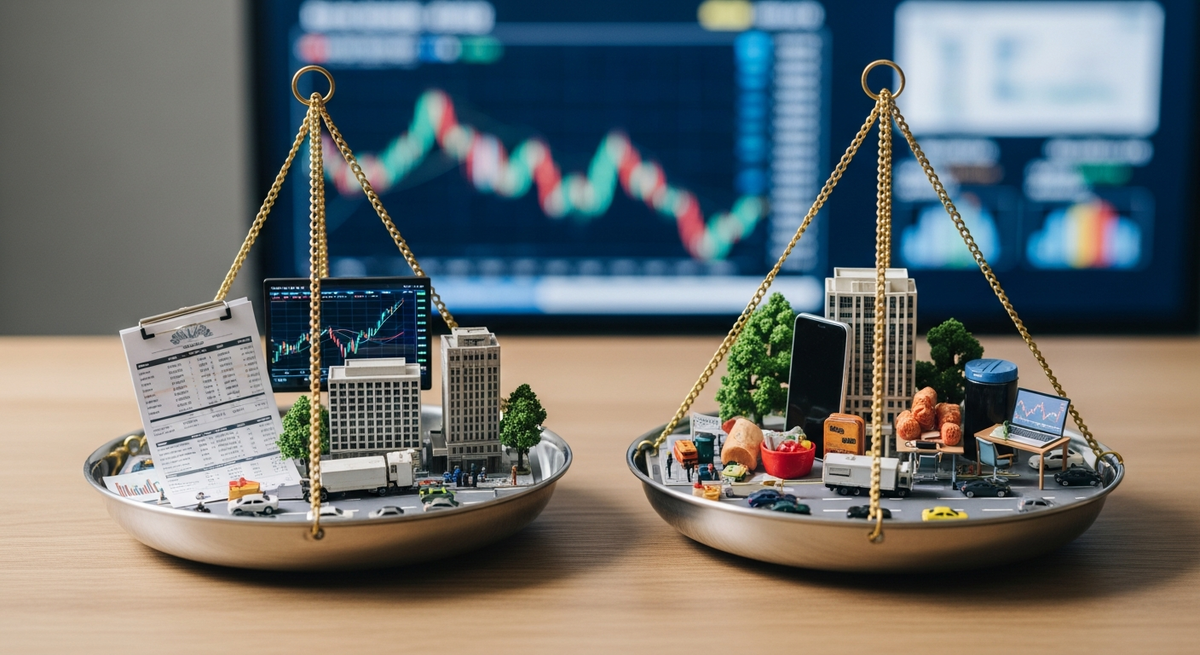
[Photo=AI Generated: Overcoming Crisis Through Stable Asset Allocation]
- Emergency Fund Establishment and Cash Liquidity Securing: To prepare for crisis situations such as unexpected unemployment, income reduction, and medical expenses, it is a common recommendation to secure an emergency fund equivalent to at least 3 to 6 months of living expenses. This fund should be kept in highly liquid assets such as bank deposits or CMAs (repurchase agreement securities) that can be withdrawn anytime and utilized immediately when needed. Increasing cash liquidity becomes a powerful defense mechanism for households to endure amid economic uncertainty like stagflation.
- Rational Spending Management and Reduction of Unnecessary Consumption: By preparing household accounts or using digital household account apps, you should carefully analyze income and expenses and boldly cut unnecessary spending items. In an era of high inflation, prices of essential consumer goods such as food and energy rise, so it is important to establish frugal habits in daily life, such as cooking at home instead of eating out or increasing the use of public transportation. Canceling subscription services or unnecessary services that are charged regularly is also an effective method.
- Debt Management and Priority Setting for High-Interest Debt Repayment: In a high inflation and low growth environment, the possibility of rate increases is high, so debt can become a major factor pressuring household finances. It is important to prioritize repaying high-interest debt such as credit card bills and overdraft loans to reduce interest burden. Considering debt consolidation loans or low-interest rate conversion loans is also a good approach.
- Strategic Use of Floating-Rate and Fixed-Rate Loans: If there is a large-scale loan such as a mortgage, you should closely monitor interest rate trends and make the choice between floating-rate and fixed-rate loans that is most advantageous to you. During periods of rising rates, fixed-rate loans may be favorable, but considering the possibility of rate cuts on floating-rate loans, it is wise to consult with experts and make careful decisions.
Investment Portfolio for Stagflation Preparation: Simultaneous Defense and Growth
Since stagflation causes asset value decline and reduced real purchasing power, it is necessary to adjust investment portfolios to hedge risks and pursue potential growth.
- Consideration of Inflation Hedge Asset Investment: It is necessary to pay attention to assets that are directly linked to inflation or have high value preservation capabilities. Representative examples include raw materials (gold, silver, crude oil, etc.) which tend to increase in price during inflationary periods. Additionally, real assets such as real estate can provide inflation hedging effects, but you must consider liquidity issues and burdens in high-interest rate environments. Stocks in certain essential consumer sectors (food, pharmaceuticals, utilities, etc.) can expect steady returns based on relatively stable demand even during economic slowdown.
- Defensive Investment Strategy Focused on Dividend Stocks and Value Stocks: During periods of economic slowdown, dividend stocks and value stocks that are undervalued relative to companies' intrinsic worth can be relatively stable investment options compared to growth stocks. This is a strategy to increase defense against market volatility by investing in companies with solid financial structures and stable cash flows. Dividend income plays a role in offsetting some of the decline in currency value due to inflation.
- Importance and Methods of Risk Management Through Diversified Investment: The investment adage "don't put all your eggs in one basket" becomes even more important during stagflation periods. By diversifying investments across various asset classes such as stocks, bonds, raw materials, and real estate, you distribute the risk of decline in specific assets, and by diversifying investment timing and regions, you minimize risks. Considering the correlation among assets and combining assets that move in different directions is an effective method of diversified investment.
- Overseas Investment Strategy Considering Global Economic Conditions: Rather than limiting your focus to a specific country's economic situation, it is important to broaden your perspective to global markets. Pay attention to assets in resource-rich countries or countries with economic structures strong against inflation, but comprehensively consider currency fluctuation risks and political stability. Rather than mentioning specific time periods or countries, it is wise to analyze overall economic trends and industrial characteristics of each country to establish general principles regarding promising overseas assets.
Income Diversification and Skill Development: Ways to Strengthen Individual Competitiveness
The key to securing individual financial stability amid economic uncertainty such as stagflation lies not just in asset management but in diversifying one's income sources and strengthening one's capabilities. This is the path to establishing a solid foundation that will not be shaken by economic crises from a long-term perspective.
- The necessity and approach to discovering additional income sources such as multiple jobs and side businesses: Securing additional income sources beyond your primary job is an effective way to strengthen household finances and prepare for uncertainty. Actively explore online platform-based side businesses that leverage your strengths and time (talent sales, content creation, online courses, etc.), freelance work, or weekend/evening part-time jobs. Opportunities for income generation through the digital economy, such as small-scale startups or smart store operations, are also steadily increasing.
- Strategy to strengthen competencies through learning promising future professions and technologies: In the face of rapidly changing industry trends, it is important to pay attention to professions and technologies that are expected to gain greater value in the future and to learn them. Fields such as artificial intelligence, data science, cloud computing, cybersecurity, and ESG-related positions are expected to have sustained demand. Enhance your expertise and strengthen your competitiveness in the labor market through relevant online lectures, educational programs, and certification acquisition.
- Maintaining competitiveness through lifelong learning and self-development planning: Changes in the economic environment require continuous learning. It is important to maintain a lifelong learning mindset that does not settle for existing knowledge and skills but continuously acquires new information and updates your capabilities. Consistently implement self-development plans by reading books in fields of interest, attending seminars, and taking online courses, cultivating the flexibility to adapt to our changing times.
- The importance of personal branding and network building: Personal branding, which communicates your expertise and value to the outside world, plays an important role in creating new opportunities. Utilize social media, blogs, and portfolio websites to showcase your expertise, and build networks with experts in related fields to exchange information and explore collaboration opportunities. A solid network can be invaluable in finding new income sources or re-employment opportunities during times of crisis.
Turning Crisis into Opportunity: Long-term Perspective and Psychological Preparation
Stagflation not only causes economic difficulties but can also amplify anxiety and stress throughout society. To wisely overcome this situation and instead seize it as an opportunity for growth, clear judgment, a long-term perspective, and a healthy psychological attitude are essential.
- The importance of maintaining clear judgment without being swept up by economic news: In times of economic crisis, inaccurate or exaggerated information tends to abound. Rather than being swayed by specific news or expert opinions, develop the ability to make judgments and decisions based on trustworthy information. Investment that adheres to principles according to long-term plans is more important than emotional selling or buying.
- The necessity of continuous economic learning and information exploration: Since economic conditions are constantly changing, it is important to continuously learn about economic trends and explore related information. Develop the habit of reading economic news daily, building foundational knowledge through economic books, and comparing and analyzing opinions from various experts. Such learning helps alleviate vague anxiety and aids in making rational decisions.
- New business and investment opportunities that can be discovered even in times of crisis: Every crisis contains hidden opportunities. Stagflation can promote changes in existing industrial structures and create new needs. For example, consumer trends emphasizing savings and efficiency may spread, or demand for specific raw materials or technologies may surge. An active approach to reading changing market trends and exploring new business models and investment targets is needed.
- Maintaining a positive mindset and stress management methods: Economic pressure can easily lead to psychological stress. It is important to maintain a positive mindset without being consumed by anxiety and frustration. Find your own stress relief methods such as regular exercise, sufficient sleep, and hobby activities, and gain psychological support through communication with family and friends. Recording and encouraging small successes in achieving financial goals and maintaining self-confidence become long-term pillars of support.
Copyright © JKN. Unauthorized reproduction or redistribution prohibited.