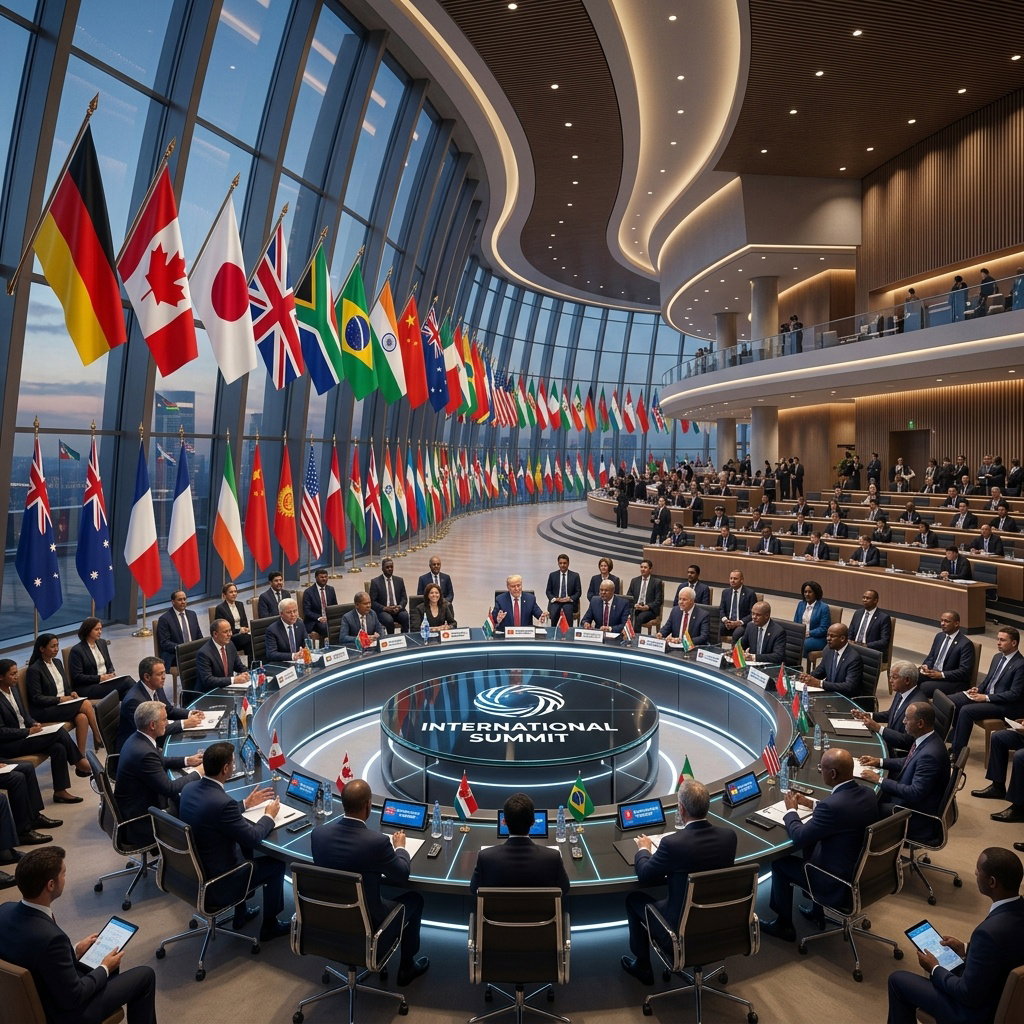
The United Nations Security Council, a pivotal institution for maintaining international peace, is facing outdated structural limitations and is under pressure for reform. The permanent member system, centered on the victorious powers of World War II, no longer fully reflects the current multipolar international landscape. The paralysis of its functions due to the abuse of the veto power is a key factor simultaneously fueling arguments for the Security Council's irrelevance and a crisis of legitimacy.
The UN Security Council is the highest decision-making body responsible for international peace and security, yet its structural rigidity, rooted in the 1945 system, acts as an impediment to resolving modern conflicts. Particularly amidst constantly emerging geopolitical crises, the exercise of veto power by permanent members based on their self-interests effectively blocks the Security Council's effective measures, creating a vacuum in international order. This is interpreted as a significant systemic flaw that goes beyond mere institutional efficiency, leading to a decline in the credibility of the UN system itself.
▲ Permanent Members' Veto Monopoly and the Paralysis of Decision-Making Functions
The biggest point of contention in Security Council reform is the adjustment or abolition of the powerful veto power held by the five permanent members (P5). From the Cold War era to recent localized conflicts, the Security Council has repeatedly demonstrated its powerlessness in matters involving the direct interests of its permanent members. While the veto was originally designed as a safeguard to prevent all-out war between major powers, there is growing criticism that it has now been distorted into a tool to justify unilateral actions by specific states or to neutralize international legal sanctions.
▲ Power Reconfiguration Surrounding the Rise of Emerging Nations and the Expansion of Representation
The demand for diversification in the composition of member states, driven by changes in the global economic and political landscape, is also a core pillar of reform. The G4 nations—comprising Germany, Japan, India, and Brazil—strongly aspire to obtain permanent member status, while countries in Africa and South America, the so-called 'Global South,' also advocate for stronger regional representation. This phenomenon stems from a crisis of legitimacy, where the current Western-centric system is no longer perceived to represent the voices of the entire world, and it has emerged as an essential task for establishing a democratic decision-making structure within the international community.
▲ Realistic Barriers to Reform Proposals and Conflicts of Interest Among Member States
However, reaching a concrete agreement on reform remains extremely difficult. The checks from the 'Coffee Club' (UfC), which opposes the expansion of permanent members, coupled with the legal threshold requiring the consent of all permanent members and ratification by two-thirds of the member states to amend the UN Charter, are considered virtually insurmountable barriers. Ultimately, Security Council reform is not merely about institutional improvement; it is an area that requires a high degree of political compromise among major powers on how to accommodate the changed balance of power within the institutional framework.
![[금융진단] 미 증시, 지정학 완화·빅테크 반등에 상승](https://images.jkn.co.kr/data/images/full/98/28/982892.jpg?aspect_ratio=288:168&crop_gravity=northwest&width=288)