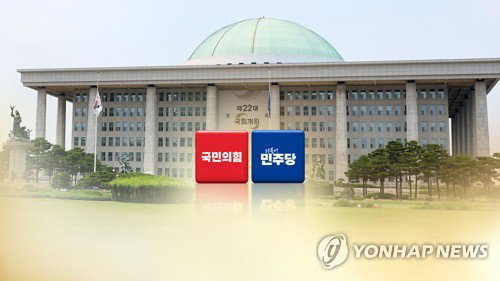
The ruling and opposition parties are engaged in a fierce debate over the controversy surrounding Unification Minister Jeong Dong-young's remarks on North Korea-related information and the impact of the Coupang incident on U.S.-ROK relations. The People Power Party (PPP) asserts that the U.S.-ROK alliance is in an abnormal state and has called for a reshuffle of the government's diplomatic and security leadership. In contrast, the Democratic Party (DP) countered by criticizing the use of diplomatic and security issues as a strategy for local elections, deeming it an act that harms national interests.
On April 25, 2026, the ruling and opposition parties engaged in a heated debate over the controversy surrounding Unification Minister Jeong Dong-young's remarks on North Korea-related information and the impact of the Coupang incident on U.S.-ROK relations. The People Power Party (PPP) claimed that abnormal signs were appearing in the U.S.-ROK alliance and launched a full-scale criticism of the government's diplomatic and security policies. They emphasized that suspicions of Minister Jeong's classified information leak were undermining alliance trust and negatively affecting key security negotiations. Specifically, they argued that diplomatic friction surrounding the Coupang incident was obstructing sensitive security negotiations, such as nuclear submarine fuel supply and uranium enrichment rights, pointing to a comprehensive crisis in the diplomatic and security apparatus.
Jang Dong-hyuk, leader of the People Power Party (PPP), quoted remarks made by Presidential National Security Advisor Wi Sung-lac in Vietnam on April 23, stating that he was 'striving to manage the (U.S.-ROK) alliance relationship,' interpreting this as an official admission by the National Security Advisor that U.S.-ROK relations were 'abnormal.' Leader Jang asserted that this statement was a candid confession that the U.S.-ROK alliance, a core pillar of security on the Korean Peninsula, was faltering, and he criticized the government's stance of not acknowledging Minister Jeong's classified information leak. He argued that avoiding the issue would make it impossible to maintain the alliance and that Minister Jeong's dismissal was necessary to restore trust with the United States. Senior Spokesperson Park Sung-hoon also stated that after Minister Jeong exposed the location of North Korea's uranium facilities, the U.S. began restricting key information provided to South Korea, emphasizing that this signifies a fundamental breakdown of trust between allies. Spokesperson Ham In-kyung also criticized that the reality, including reduced sharing of key information and difficulties in security negotiations, contradicts the government's optimistic explanations.
▲ Debate Over Abnormal Signs in U.S.-ROK Alliance
The Democratic Party (DP) strongly refuted these claims by the People Power Party (PPP), characterizing them as an attempt to use diplomatic and security issues as a strategy for local elections. DP Floor Spokesperson Baek Seung-ah criticized the PPP's focus on political infighting by foregrounding diplomatic and security issues as not merely irresponsible but an act of 'treason' that harms national interests. Spokesperson Baek described Leader Jang Dong-hyuk's 8-night, 10-day visit to the U.S. as 'empty-handed diplomacy,' pointing out that he himself stated his visit's purpose was for local elections, thereby reducing diplomacy to an electoral tool. She added that this is not unrelated to the situation where even PPP candidates are shunning Leader Jang and calling for his resignation. The Democratic Party emphasized that it would resolutely confront diplomatic and security disputes that harm national interests and would protect national interests and the people through the Lee Jae-myung administration's pragmatic diplomacy.
Spokesperson Jang Yoon-mi also criticized the People Power Party (PPP) for distorting the true meaning of National Security Advisor Wi Sung-lac's remarks and imposing arbitrary interpretations, claiming that he 'defined U.S.-ROK relations as abnormal.' Spokesperson Jang stated that Advisor Wi's remarks stemmed from a commitment to stably manage pending issues between the U.S. and ROK, and she pointed out that the PPP's behavior of fabricating statements to normalize a crack in the U.S.-ROK alliance is a typical example of old-fashioned politics that prioritizes political infighting over national security. The Democratic Party urged the PPP to cease exaggerating issues that could create fissures in the U.S.-ROK alliance, warning that unnecessary debates surrounding diplomatic and security issues could lead to national division and a decline in external credibility. Thus, the ruling and opposition parties continue their fierce confrontation, revealing fundamental differences in their perspectives on the current state of U.S.-ROK relations and the government's diplomatic and security policies.
▲ Politicization of Diplomatic and Security Issues
This clash between the ruling and opposition parties is expected to have significant repercussions beyond mere policy differences, affecting the stability of the U.S.-ROK alliance and the dynamics of domestic politics. The People Power Party's (PPP) allegations of Unification Minister Jeong Dong-young's classified information leak and the subsequent claims of U.S. information restrictions are sensitive issues that could directly impact trust between the U.S. and ROK. If these claims are confirmed, demands for a major reshuffle of the diplomatic and security leadership will intensify, and the government's negotiating power with the U.S. is expected to suffer a considerable blow. In particular, the assertion that the Coupang incident is affecting key security negotiations, such as nuclear submarine fuel supply and uranium enrichment rights, could amplify public concern. This situation deepens distrust in the government's diplomatic and security policies and carries the risk of weakening South Korea's diplomatic standing in the international community.
Conversely, the Democratic Party's (DP) criticism of the 'politicization of diplomatic and security issues' can be understood in the context of emphasizing the negative impact of political infighting on national interests ahead of local elections. The controversy surrounding the purpose of People Power Party (PPP) Leader Jang Dong-hyuk's visit to the U.S. raised questions about the purity of diplomatic activities and sparked concerns that diplomacy could be exploited for domestic political ends. The DP's stance, emphasizing the Lee Jae-myung administration's pragmatic diplomacy and advocating for the protection of national interests, is interpreted as an attempt to appeal to public opinion that calls for a cautious approach and bipartisan cooperation on diplomatic and security matters. This debate is expected to continue for some time and is highly likely to emerge as a major issue in the upcoming local elections. As the claims of both sides sharply conflict, the public is demanding clear explanations regarding the actual state of the U.S.-ROK alliance and the government's response.
▲ Future Outlook for U.S.-ROK Relations and Domestic Politics
The ongoing controversy surrounding U.S.-ROK relations is expected to remain a major variable in domestic politics for the foreseeable future. The People Power Party (PPP) is likely to continue raising the possibility of a crack in the U.S.-ROK alliance, escalating pressure on the government. In particular, the issue of Unification Minister Jeong Dong-young's tenure and demands for a reshuffle of the diplomatic and security leadership could place a significant burden on the Lee Jae-myung administration. While the government repeatedly states that there are 'no problems' and that relations are 'well-managed' in response to the PPP's claims, it faces the challenge of alleviating public skepticism through concrete explanations of the situation and transparent information disclosure. The Democratic Party (DP) is expected to counter the PPP's offensive by cautioning against the politicization of diplomatic and security issues and emphasizing pragmatic diplomacy centered on national interests. Concerns are also being raised that constructive discussions on the actual state and future direction of the U.S.-ROK alliance may be difficult amidst such political confrontation.
Ultimately, both sides appear poised to actively utilize diplomatic and security issues to strengthen their respective political positions and gain an advantage in the upcoming local elections. In this process, a wise approach that clarifies factual relationships and prioritizes national interests is required. As the U.S.-ROK alliance is a core pillar of security on the Korean Peninsula, bipartisan cooperation and stable management, transcending political interests, are essential. The government must earnestly respond to the issues raised by the People Power Party (PPP) and, if necessary, take responsible measures to restore alliance trust and strengthen diplomatic and security capabilities. Conversely, there is a growing call for the opposition party to refrain from baseless slander or factual distortion and to fulfill its role as a sound watchdog of state administration through constructive criticism and the presentation of alternatives.

![[금융진단] 미 증시, 지정학 완화·빅테크 반등에 상승](https://images.jkn.co.kr/data/images/full/98/28/982892.jpg?aspect_ratio=288:168&crop_gravity=northwest&width=288)