On July 14, 2026, when the 2027 minimum wage was finalized at 10,700 won per hour, a 3.7% increase from this year, the small business community expressed deep regret at the decision and criticized it for "imposing additional heavy burdens on 7.9 million small business owners amid record debt and economic slump," urging the government and National Assembly to immediately implement measures to ease business burdens.
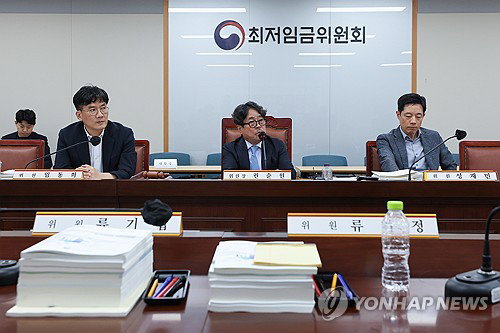
The Minimum Wage Council held its 14th plenary session at the Government Complex in Sejong on July 14, 2026, and made a final decision on the 2027 minimum wage at 10,700 won per hour. This represents a 3.7% increase from this year. At the meeting, the workers' side proposed 10,730 won and the employers' side proposed 10,700 won, and a vote among 27 committee members resulted in the employers' position receiving 15 votes for the final decision. The workers' side received 11 votes, with 1 invalid vote. Kwon Sun-won, chairman of the Minimum Wage Council, issued a statement following the decision.
In response to this decision, the Korean Federation of Small and Medium Enterprises and the Korea Federation of Small Merchants immediately expressed regret and disappointment. The Korea Federation of Small Merchants strongly criticized the decision, saying "an additional minimum wage increase is the last straw for small business owners who are just barely surviving." They emphasized the desperate reality of "7.9 million small business owners enduring day by day amid record debt and economic slump," and warned that excessive labor costs for small and medium enterprises could lead to job cuts and increased closures. In particular, they expressed concerns that jobs for vulnerable workers would also be threatened.
The small business industry raised fundamental questions about the minimum wage determination structure and urged the government and National Assembly to implement urgent measures. They demanded ▲implementation of industry-specific differentiated application of minimum wage ▲system improvements reflecting companies' ability to pay ▲biennial minimum wage decisions ▲strengthened representation of small business owners in the Minimum Wage Council ▲revival of job stability funds ▲expanded financial support for small business management stability. The Korea Federation of Small Merchants pointed out problems with the current system, stating "we fundamentally question the current structure where the fate of small business owners is determined in the hands of union officials and professors who have nothing to do with small business owners, the direct parties involved in the minimum wage issue."