As international oil prices stabilized after spiking due to Middle East tensions, import prices last month fell at the fastest rate in 3 years and 6 months.
With rising semiconductor prices and increased exports, terms of trade also improved significantly, analyzing that the profitability of domestic export companies has further improved.
▲ Export Prices Flat…Semiconductor Strength Offsets Oil Price Decline
According to the 'June 2026 Export and Import Price Index and Trade Index (Provisional)' announced by the Bank of Korea on the 15th, export prices in won terms recorded no change month-on-month (0.0%) in June. Compared to the same month last year, they showed a 48.9% increase, continuing strong growth.
The won-dollar exchange rate rose 2.5% from the previous month, serving as a factor for export price increases, but the decline in coal and petroleum product prices partially offset this.
Meanwhile, the rise in computer, electronic and optical equipment prices served as a key factor supporting export prices.

Gasoline[Courtesy of Yonhapnews]
▲ HBM and DRAM Price Increases…Strengthening Semiconductor Export Competitiveness
By product category, export prices for computer, electronic and optical equipment including semiconductors surged 4.5% month-on-month and 117.4% year-on-year.
DRAM rose 3.1% from the previous month and flash memory increased 11.7%, continuing strong memory prices. Year-on-year increases reached 277.9% and 268.1% respectively.
In contrast, coal and petroleum products fell 13.9% month-on-month due to declining diesel and jet fuel prices, limiting the overall export price increase.
▲ Import Prices Fall 4.4% Due to Sharp Drop in International Oil Prices
Import prices were significantly affected by the decline in international oil prices.
Import prices in won terms fell 4.4% month-on-month, but maintained a 20.6% higher level compared to the same month last year. The average Dubai crude oil price plummeted 23.0% from $103.15 per barrel in May to $79.45 per barrel in June.
Raw material prices fell 10.3%, and intermediate goods also declined 3.2% due to the impact of falling petroleum and chemical product prices.
In contrast, capital goods and consumer goods each rose 1.6%, showing relatively firm trends.
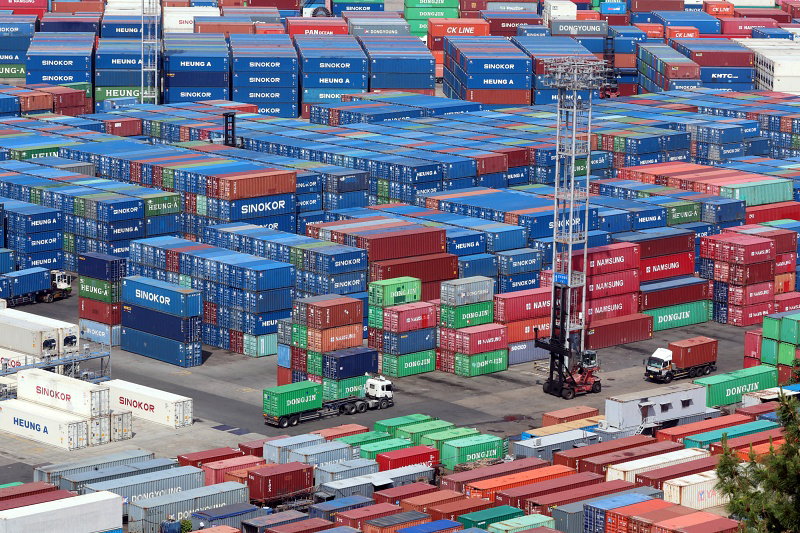
Exports(Photo : [Courtesy of Yonhapnews])
▲ Export Volume Increases 29.8%…Semiconductors Drive Growth
Trade indicators continued to improve.
The June export volume index increased 29.8% year-on-year, and the export value index surged 74.8%. In particular, export volumes for computer, electronic and optical equipment increased 40.0% and export values jumped 172.4%, leading overall export growth.
The import volume index also increased 12.0%, and the import value index rose 30.5%. With increased imports of semiconductor equipment and machinery, the trend of expanded domestic manufacturing investment appears to be continuing.
Kim Min-seon, head of the Price Statistics Team, explained, "The impact of the decline in international oil prices was the largest factor. As crude oil prices fell sharply, prices of mining products and coal and petroleum products declined, and accordingly, overall import prices also fell."
She added, "Export prices maintained levels similar to the previous month as the exchange rate appreciation factor and coal, petroleum product and chemical price decline factors worked together."
▲ Terms of Trade Improve Significantly…Export Companies' Profitability Enhanced
Improvement in terms of trade was also notable.
The net barter terms of trade index rose 15.6% year-on-year as the export price increase rate significantly outpaced the import price increase rate. This means an environment was created where more imported goods could be purchased with the same amount of exports.
Combined with increases in export volumes, the income terms of trade index surged 50.0% year-on-year. For export companies, as both prices and volumes improved simultaneously, their actual trading conditions have improved significantly.
Copyright © JKN. Unauthorized reproduction or redistribution prohibited.