'4 More Weeks of Suffering' Red Sea Threat Puts Asia's Refineries on Emergency Alert...Hyundai Oilbank Takes Detour

고진아 Reporter

The shadow of Yemen's Iran-friendly Houthi rebels looming over the Red Sea is driving Asian refiners into a painful detour lasting "4 more weeks." As South Korea's Hyundai Oilbank endures shipping delays and soaring costs to secure Saudi crude, geopolitical tensions stemming from the Middle East are shaking the global energy supply chain.

Currently, Asia's refining industry has been hit hard by the Houthi rebels' warning of a Red Sea blockade, directly impacting Saudi crude oil transportation. The existing key crude oil shipping route passing through the Bab el-Mandeb Strait at the southern entrance of the Red Sea is facing a practical blockade, prompting refiners to urgently seek alternatives.

In this situation, South Korea's Hyundai Oilbank is already taking concrete steps to search for very large crude carriers (VLCCs), accepting potential shipping delays of up to 4 weeks and skyrocketing freight and fuel costs. This involves examining an alternative route that, instead of the existing southbound Red Sea path, moves northward from Saudi Arabia's Yanbu Port to utilize Egypt's Suez Canal and the Sumed Pipeline.

The new alternative route is expected to increase transportation time by up to "4 weeks" compared to the existing route, with correspondingly significant increases in freight and fuel costs. In particular, VLCCs have difficulty passing through the Suez Canal due to draft restrictions, requiring them to send a portion of the crude oil loaded on the ship through the Sumed Pipeline and pass through the canal with an empty vessel. This further deteriorates logistics efficiency.
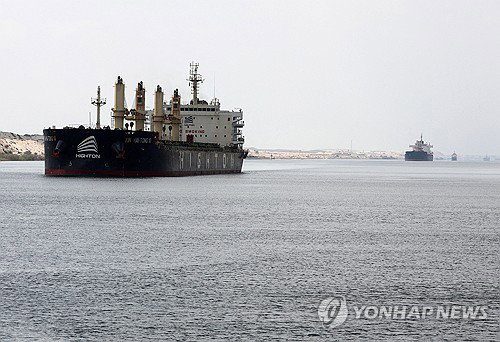
'4 more weeks of pain' Red Sea threat puts Asian refiners on alert...Hyundai Oilbank also seeks alternative routes
[Photo=Yonhapnews]

Evidence has emerged that the Houthi rebels' threats have transcended mere warnings and are translating into actual changes in vessel navigation behavior. According to LSEG shipping data, the Liberian-flagged tanker "Rhodos" chose a route heading from Yanbu Port to the northern entrance of the Suez Canal, avoiding entry into the southern Red Sea.

Matt Smith, head of commodities research at shipping data company Kpler, assessed that "the changing navigation behavior of tankers means shipping companies are taking the Houthi threat seriously." Last month, Saudi crude oil and petroleum product volumes passing through the Bab el-Mandeb Strait exceeded "4 million barrels per day," marking a record high, and the Houthi disruption emerging at this point is analyzed to have even greater ripple effects. Similar to past instances when Iran threatened to blockade the Strait of Hormuz, this current Red Sea threat is having a significant impact on global energy security.

If the Houthi rebels' Red Sea threat persists, it could lead not only to undermined crude oil supply stability for Asian refiners but also to rising freight rates and increased oil price volatility in the global energy market. This signifies impacts extending beyond a simple change in logistics routes, pointing to the broad and complex effects of geopolitical tensions in the Middle East on global economics and energy security, and suggests the necessity for countries and companies to pursue new energy strategies.

Copyright © JKN. Unauthorized reproduction or redistribution prohibited.

'4 More Weeks of Suffering' Red Sea Threat Puts Asia's Refineries on Emergency Alert...Hyundai Oilbank Takes Detour : 국제 : JKN