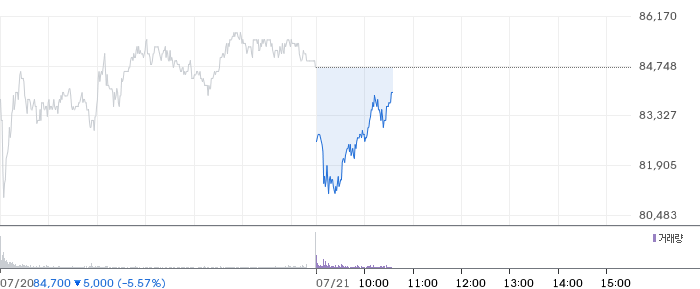
SK Telecom's stock price fell 0.83% during trading on the 21st, trading around the 84,000 won level. This is being interpreted as a result of conservative investment sentiment spreading across the telecommunications sector in general without any particular negative announcements, coupled with profit-taking selling pressure.
SK Telecom (017670) recorded a decline of 0.83% to 84,000 won on the KOSPI market on the 21st, continuing its downward trend. This represents a decline that has persisted since the morning, reflecting investors' conservative approach to the entire telecommunications sector despite positive market sentiment the day before. Despite being a major telecommunications stock offering stable dividend appeal based on solid earnings, it is failing to avoid weakened investment sentiment during trading.
SK Telecom recently disclosed efforts to enhance transparency in its environmental, social, and governance (ESG) management through "[Attachment Correction] Sustainable Management Report and Related Matters (Voluntary Disclosure)." However, the market assesses that the immediate impact of such voluntary disclosures on the company's fundamentals is limited, and there is a general atmosphere of not interpreting it as a major variable in today's stock price movements. The fact that the stock price is declining despite the absence of any unusual negative announcements suggests that weight is being placed more on industry-wide investment sentiment and supply-demand factors rather than individual company issues.
In fact, the downward pressure on SK Telecom's stock price today is observed to stem from modest selling by foreign investors and institutions. The perception is spreading that the telecommunications sector's dividend appeal could be somewhat diluted during periods of rising interest rates, leading to the emergence of selling related to portfolio adjustments. In 2026, as the domestic telecommunications market faces stalled 5G penetration rates and intensifying price competition, SK Telecom is actively pursuing transformation into non-telecommunications new businesses such as AI, cloud, and media, seeking new growth drivers. While these new business investments are positive for long-term corporate value enhancement, the market is continuing careful evaluation due to the need for investment costs and time to achieve visible results in the short term.