The Bank of Korea's Monetary Policy Committee raised the base rate by 0.25 percentage points from 2.50% to 2.75% on the 16th, further strengthening its tightening stance.
While the domestic economy is expected to recover faster than anticipated, centered on semiconductors, with this year's economic growth outlook projected to be significantly raised, consumer price inflation and core inflation remain above target levels, making price stability emerge as the top priority of monetary policy.
The Bank of Korea forecasts growth will continue while leaving open the possibility of additional rate increases, taking into account the simultaneous expansion of inflation and financial stability risks.
▲ Base Rate Hike Despite Growth Improvement…Monetary Policy Shifts Focus to Price Stability
The Bank of Korea assessed that the domestic economy's growth has been stronger than expected, with exports and capital investment increasing rapidly centered on semiconductors.
Consumption is also on a recovery path due to improved income conditions, with overall economic improvement expanding across the board.
However, the Monetary Policy Committee determined that price stability is a more urgent task than growth recovery.
It decided that a 0.25 percentage point rate increase was appropriate, as consumer price inflation is expected to remain above target levels for a considerable period and financial market uncertainty continues.
This decision was assessed as clarifying the monetary policy stance of prioritizing inflation control and financial stability over economic stimulus.
▲ This Year's Growth Rate Expected to Exceed 2.6% Forecast…Semiconductors Lead Recovery
The Bank of Korea expects this year's economic growth rate to significantly exceed the 2.6% forecast presented in May.
The booming semiconductor industry is driving exports and capital investment, with growth appearing stronger than anticipated.
Consumption is continuing a gradual recovery supported by income growth, and employment has shifted to an increasing trend, centered on the service sector.
However, manufacturing employment decline continues, showing differences in recovery speed by industry.
The Bank of Korea forecasts growth will continue for the time being while identifying the extent of semiconductor business expansion, spillover effects to domestic demand, Middle East developments, and changes in the global trade environment as key variables determining future growth.
In particular, the current growth's heavy dependence on the semiconductor industry was noted as a structural limitation of the Korean economy.
▲ Consumer Price Inflation at 3.2%…Core Inflation Pressure Also Difficult to Reverse
The key background for this rate increase was still elevated inflation pressure.
The June consumer price inflation rate rose to 3.2% due to the impact of international oil prices and agricultural and fisheries product price increases.
Core inflation, excluding food and energy, also maintained 2.5%, showing that price increases are spreading broadly rather than being limited to specific items.
General inflation expectations also remained in the late 2% range, indicating high anxiety about price instability.
The Bank of Korea forecasts that while international oil prices have stabilized somewhat, accumulated cost increases and currency burden pressures continue, and with demand pressure from consumption recovery added, inflation will continue to exceed target levels for a considerable period.
This year's consumer price inflation rate is expected to broadly align with the existing forecast of 2.7%, but core inflation is expected to record higher levels than previously forecast.
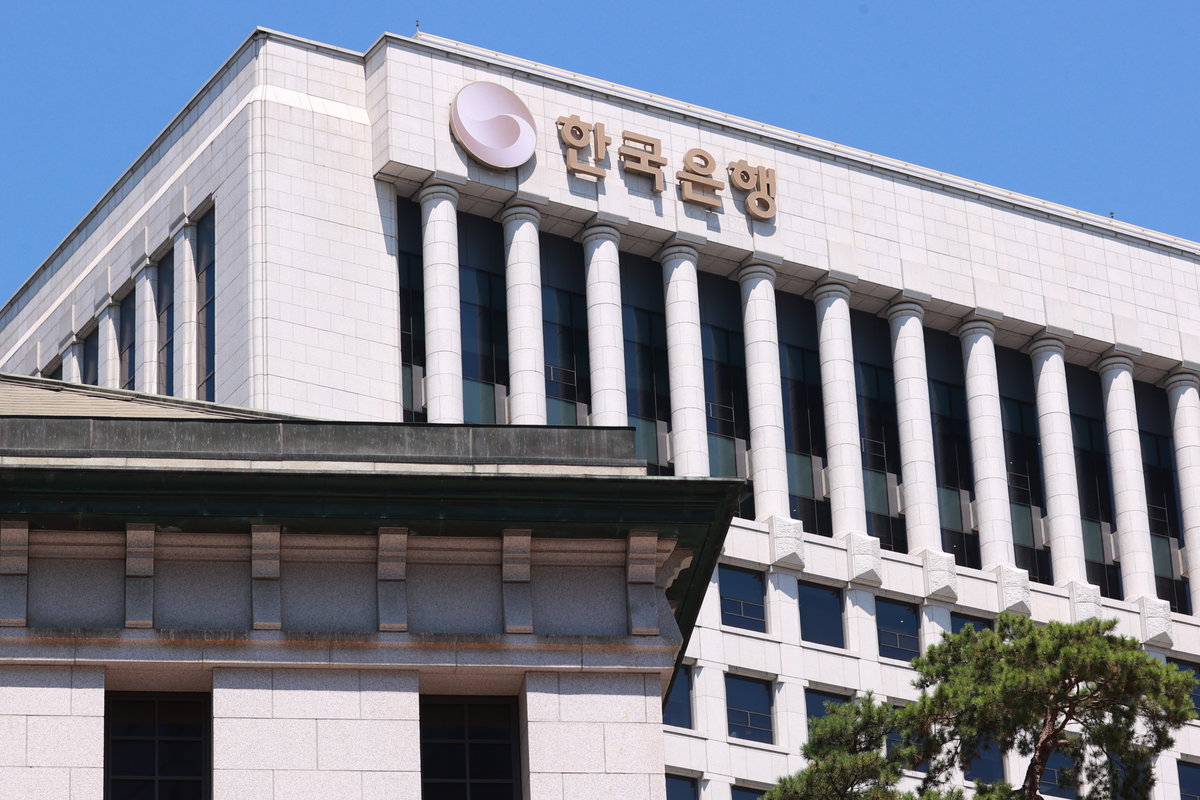
Bank of Korea [Provided by Yonhapnews]
▲ Financial Stability Risk Expands…Exchange Rate, Household Debt, and Real Estate All Burdensome
Financial stability risk was also an important factor supporting the rate increase.
The won-dollar exchange rate rose to the mid-1,500 won range due to dollar strength and foreign capital outflows, then fell to the late 1,400 won range due to improved foreign exchange market supply and demand.
Government bond yields rose due to expectations of domestic and international monetary policy changes, and the domestic stock market showed high volatility due to changes in AI investment outlook and massive net selling by foreigners.
Household loans continued to show large increases with both mortgage loans and other loans increasing, and residential price increases in the Seoul metropolitan area expanded.
The Bank of Korea assessed that high exchange rate volatility, household debt increases, and real estate price rises are acting as potential risk factors for the financial system.
▲ Global Economy to Continue Growth…External Uncertainties Remain
The global economy is expected to continue gradual growth centered on expanded AI investment despite geopolitical tensions in the Middle East.
Meanwhile, global inflation pressure is expected to persist for the time being as the impact of energy price increases is reflected with a time lag.
In international financial markets, dollar strength and government bond yields have continued due to the possibility of further Federal Reserve tightening and Middle East developments, and global stock markets have also shown significant volatility depending on changes in AI and semiconductor industry outlook.
Going forward, key variables in the global economy will include the status of negotiations between the United States and Iran, whether AI investment expands, monetary policies of major countries, and changes in the global trade environment.
▲ Possibility of Additional Rate Increases Maintained…All Committee Members in Favor
The Bank of Korea reconfirmed its position to operate monetary policy with price stability and financial stability as top priorities.
The domestic economy is expected to maintain firm momentum in both exports and domestic demand based on semiconductor prosperity, but inflation is expected to continue exceeding target levels for a considerable period as both cost increases and demand expansion work simultaneously.
Accordingly, the decision on additional rate increases will be made by comprehensively reviewing inflation pressure, economic improvement trends, and financial stability conditions.
All seven members of the Monetary Policy Committee approved this base rate increase decision.
Copyright © JKN. Unauthorized reproduction or redistribution prohibited.