The ASEAN Regional Forum (ARF), the only multilateral regional security consultative body in which North Korea participates, has appeared desolate for the second consecutive year due to North Korea's absence. The forum held in Manila, the Philippines on July 23, 2026 (local time) not only confirmed once again that the thread of inter-Korean dialogue has been completely severed, but also revealed the stark reality of inter-Korean disconnection in the multilateral diplomatic framework as key contact points with major countries for discussing Korean Peninsula issues have disappeared.
South Korean Foreign Minister Cho Hyun attended the ARF held at the Philippine International Convention Center (PICC) and emphasized South Korea's will for inter-Korean peace coexistence and cooperation. However, due to North Korea's absence, no dialogue opportunity was secured. The ARF, where South and North Korean delegations once directly engaged in debate, showed an atmosphere in which discussion of the Korean Peninsula issue itself seemed to be missing amid North Korea's absence. While South Korea urged the cessation of illegal North Korea-Russia military cooperation amid North Korea-Russia and North Korea-China closeness, the multilateral diplomatic framework exposed its limitations as meaningful contact with Chinese and Russian diplomatic leaders, the key parties to the Korean Peninsula issue, fell through.
Wang Yi, director of the Central Foreign Affairs Commission of the Chinese Communist Party and foreign minister, did not attend this ARF at all, and a meeting with Foreign Minister Cho did not take place. However, it was reported that Wang's visit to South Korea next month is being coordinated. Russian Foreign Minister Sergey Lavrov left the conference room after delivering only his prepared remarks and exchanged only brief greetings with Minister Cho.
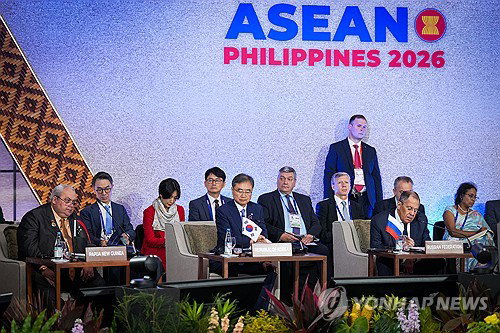
The main concerns of the ARF that day focused on other regional issues rather than the Korean Peninsula problem. In particular, the South China Sea sovereignty dispute resulting from conflicts between China and the Philippines over the South China Sea emerged as the most pressing issue. Philippine Foreign Secretary Teresa Lazaro reconfirmed the position that normalization of relations is still far off, citing that the military government's implementation of five agreements must come first regarding the Myanmar issue. Rising tensions in Middle Eastern affairs, particularly the Strait of Hormuz issue, were addressed as another major agenda. The reality of the Korean Peninsula issue becoming "marginalized" on the international multilateral stage was clearly revealed at this forum. East Timor attended for the first time as a full member after joining ASEAN last year, and the United Kingdom received approval for ARF membership. U.S. Secretary of State Marco Rubio also attended the forum.