Expectations are growing that this year's total fertility rate could recover to the 0.9s for the first time in seven years.
While the number of births and marriages continue to increase, showing signs of change in the low-birth trend, analysts have noted that considerable time will be needed to improve the population structure due to the accumulated effects of long-term population decline and aging.
▲ Growing expectations for fertility rate rebound
According to the National Statistical Portal (KOSIS) and population trends as of the 2nd, the total fertility rate for the first quarter of this year was 0.95, with April at 0.93 and May at 0.85. Since the total fertility rate typically tends to be higher in the first half and lower in the second half, if current trends continue, the annual total fertility rate is expected to exceed 0.9.
If this year's total fertility rate reaches the 0.9s, it would mark a recovery for the first time in seven years since 0.92 in 2019. South Korea's total fertility rate has continuously declined from 1.48 in 2000, first dropping below 1 in 2018, and reached a record low of 0.72 in 2023. Since then, it has continued its rebound for two consecutive years at 0.75 in 2024 and 0.80 in 2025.
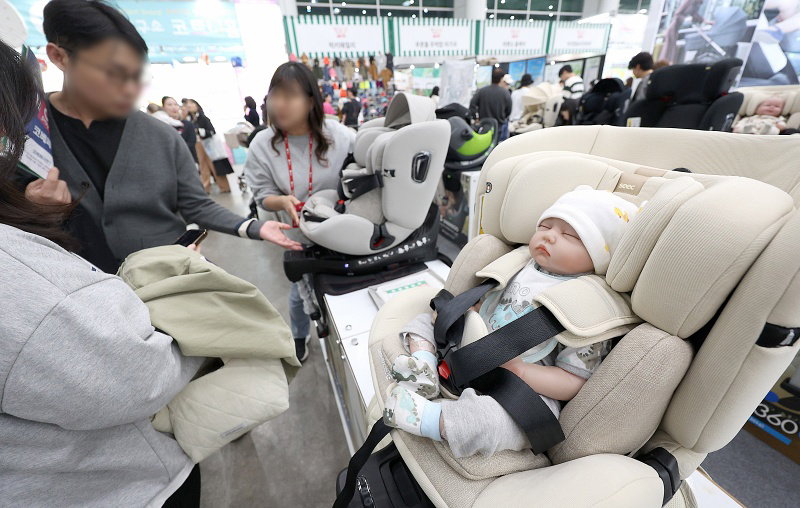
Childbirth [Provided by Yonhapnews]
▲ Marriage increase and 30s population leading the rebound
The background to the fertility rate recovery has been analyzed as a combination of increased population in their 30s, expanded number of marriages, and changing perceptions about marriage and childbirth.
The cumulative number of births from January to May this year reached 122,694, an increase of 15.2% compared to the same period last year. This is the largest figure since 2019, and the growth rate also represents the highest level since related statistics began to be compiled.
If this trend continues, there are also expectations that this year's annual number of births could exceed last year's 254,457 and expand to between the late 200,000s to as high as 300,000.
▲ Accumulated effects of low birth rate still severe
However, there are also concerns that the recent rebound in fertility rates alone is insufficient to reverse the already-progressing changes in population structure.
According to the registered census population statistics, as of 2025, the child population aged 0-14 is 5.224 million, a 24.9% decrease from 2015. Over the past decade, the child population has continued to decline by 2-4% annually, with the population base significantly shrinking.
Meanwhile, during the same period, the elderly population aged 65 and older increased from 6.617 million to 10.722 million, a 62.0% increase, surpassing 10 million for the first time. In particular, the ultra-elderly population aged 85 and older more than doubled from 525,723 to 1.148 million, indicating that the aging pace has accelerated further.
▲ Inverted pyramid population structure solidifying
The aging phenomenon is clearly evident in the composition of the population.
As of 2025, among the total population of 51.817 million, the child population accounts for only 10.1%, while the elderly population comprises 20.7%. An analysis shows that an inverted pyramid-shaped population structure, where the proportion of the elderly is more than twice that of children, is becoming solidified.
The National Assembly Budget Office also evaluated in April this year that South Korea has fully entered a super-aged society, with the child population ratio declining from 10.5% last year to 10.1% based on resident registration population, while the elderly population ratio rose from 20.4% to 21.7%.
▲ Structural reform needed beyond fertility rate rebound
Experts analyzed that while the rebound in fertility rate itself is a positive signal, it is difficult to solve the low-birth and aging problems with only temporary recovery.
The Organization for Economic Cooperation and Development (OECD) also emphasized through its recent Korea Economic Outlook that reforms are needed to address structural issues such as low birth rates, aging, and regional economic disparities. It recommended that financial support for domestic demand recovery should be combined with efforts to secure medium to long-term fiscal soundness in response to aging.
While continued improvement in fertility rates could slow the pace of population decline to some extent, analyses suggest that comprehensive population strategies encompassing not only birth support policies but also the labor market, welfare, and balanced regional development are necessary to mitigate the already-progressing aging trend.
Copyright © JKN. Unauthorized reproduction or redistribution prohibited.